

A car accident can flip your world upside down in seconds. One moment you're driving through Pennsylvania, and the next you're standing on the side of the road, shaken, confused, and unsure what to do first. The decisions you make in the minutes, hours, and days that follow can directly affect your health, your finances, and your ability to recover compensation. This guide walks you through every critical stage, from securing the scene to working with insurers and knowing when to call a lawyer. Whether your accident was minor or serious, these Pennsylvania-specific steps will help you move forward with confidence.
Table of Contents
- Assessing the scene: Safety and documentation
- Medical care: Immediate and ongoing needs
- Navigating insurance claims in Pennsylvania
- Legal representation: Protecting your rights and maximizing recovery
- Why proactive planning beats panic: An expert perspective
- Next steps: Get trusted help with your Pennsylvania auto accident recovery
- Frequently asked questions
Key Takeaways
| Point | Details |
|---|---|
| Prioritize safety first | Your immediate actions at the scene set the stage for your entire recovery. |
| See a doctor promptly | Getting medical attention early protects both your health and your claim. |
| Understand insurance steps | Knowing Pennsylvania’s insurance process helps you avoid costly mistakes. |
| Seek legal advice early | Legal guidance maximizes your compensation and protects your rights. |
Assessing the scene: Safety and documentation
Your actions at the accident scene set the tone for everything that follows. Before you think about insurance or fault, focus on safety. Move yourself and any passengers away from traffic if it is safe to do so. Turn on hazard lights, and if the damage is significant or someone is hurt, call 911 immediately.
Pennsylvania law requires you to report an accident to police when there is injury, death, or property damage that makes a vehicle inoperable. The PA crash reporting requirements outline exactly when a report is mandatory. Even when police attendance is not legally required, having an official report on file protects you.
Documentation is where many people fall short. There are first steps after a car accident that can protect your rights from the very start, and gathering solid evidence is at the top of that list. Use your phone to photograph vehicle damage, road conditions, skid marks, traffic signs, and any visible injuries.
What to collect at the scene:
- Full name, address, phone number, and driver's license number of all drivers involved
- Insurance company name and policy number for each driver
- License plate numbers and vehicle descriptions
- Names and contact information for any witnesses
- Badge number and name of responding officers
- Photos of all vehicles, the surrounding area, and any injuries
| Action | Why it matters |
|---|---|
| Call 911 | Creates an official record and ensures help arrives |
| Exchange info | Required by PA law and needed for insurance |
| Take photos | Visual evidence is hard to dispute later |
| Get witness contacts | Third-party accounts can support your version of events |
| Avoid admitting fault | Statements can be used against you in claims |
"Never apologize or say 'I'm sorry' at the scene, even out of politeness. An apology can be interpreted as an admission of fault by insurers and opposing attorneys."
Pro Tip: Write down your own account of the accident as soon as possible while details are fresh. Note the time, weather, road conditions, and the sequence of events. This personal record can be invaluable weeks later when memories fade.
Medical care: Immediate and ongoing needs
Once you've secured the scene and gathered key details, the next step is to prioritize your health and set the foundation for any future recovery. Many accident victims make the mistake of skipping the doctor because they feel fine. Adrenaline masks pain. Injuries like whiplash, concussions, and internal trauma can take hours or even days to surface.
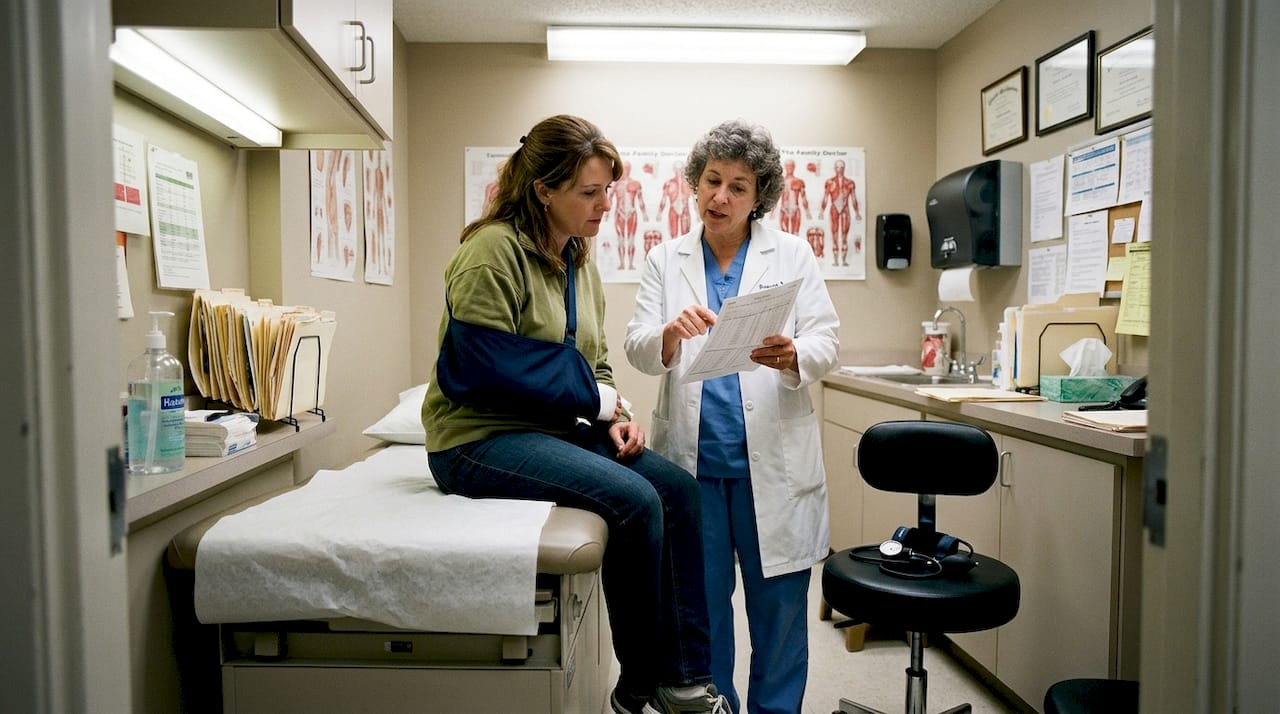
Seeking timely medical care protects both your health and your legal interests after an auto accident. Insurers and defense attorneys look closely at the gap between the accident date and your first medical visit. A long delay gives them grounds to argue your injuries were not caused by the crash.
The medical guidance after a car accident from Pennsylvania health authorities reinforces the importance of evaluation even when symptoms seem absent. Emergency rooms, urgent care clinics, and your primary care physician are all appropriate first contacts.
Records and documentation to keep:
- All emergency room and hospital visit records
- Physician notes from every follow-up appointment
- Receipts for prescriptions, medical devices, and therapy sessions
- Bills from specialists, physical therapists, and chiropractors
- A personal injury journal tracking your pain levels, limitations, and emotional state day by day
"Insurance adjusters are trained to look for inconsistencies between your medical records and your claimed injuries. Consistent, documented care is your strongest defense."
Pro Tip: If your doctor recommends follow-up treatment, attend every appointment. Gaps in treatment are frequently used by insurers to argue that you recovered faster than claimed, which can reduce your settlement significantly.
Common mistakes that can hurt your claim include waiting more than 72 hours to see a doctor, stopping treatment early, and failing to mention all symptoms at your first visit. Tell your doctor everything, even symptoms that seem minor or unrelated. When you later decide to file a personal injury claim, thorough medical records become the backbone of your case.
Navigating insurance claims in Pennsylvania
With your medical care under way and documents in hand, it's time to tackle the insurance process, often the most confusing step. Pennsylvania operates under a unique system that surprises many drivers.
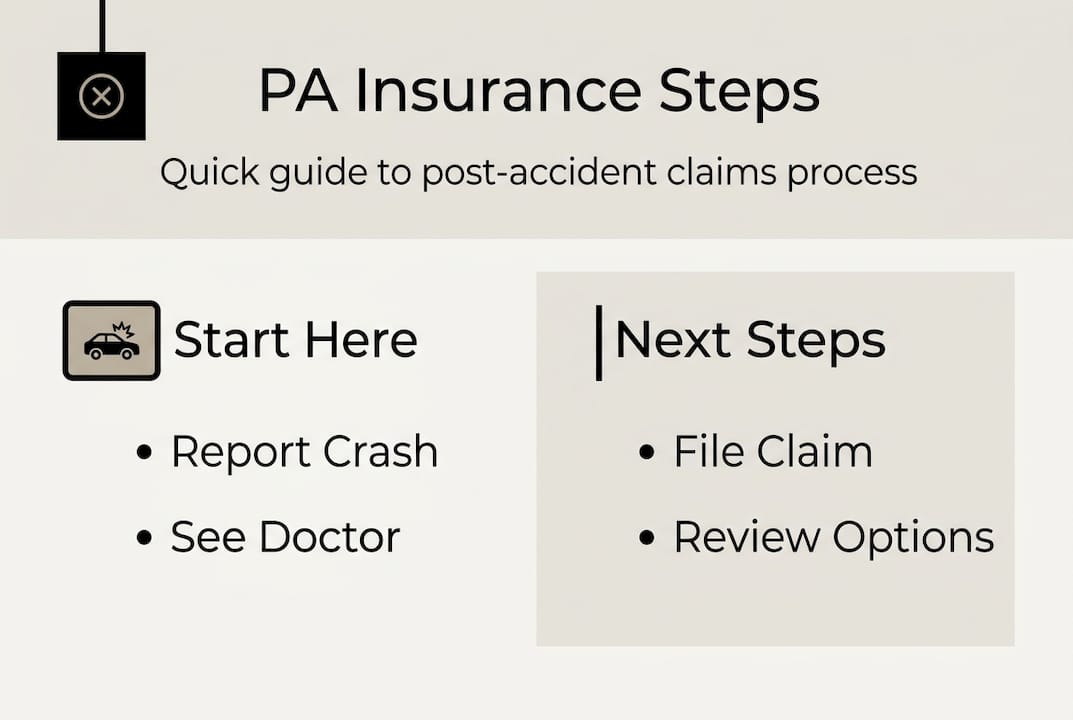
Understanding Pennsylvania's insurance system is essential before you file. The state uses a "choice no-fault" model. When you buy a policy, you choose between limited tort and full tort coverage. This choice directly affects your ability to sue for pain and suffering. Knowing your Pennsylvania auto accident rights before you file can ensure fair compensation after an accident.
| Coverage type | What it means | Who it suits |
|---|---|---|
| Limited tort | Lower premiums, restricted right to sue for pain and suffering | Drivers seeking lower costs |
| Full tort | Higher premiums, full right to sue for all damages | Drivers wanting maximum protection |
| PIP (Personal Injury Protection) | Pays medical bills regardless of fault | All PA drivers with no-fault policies |
Steps to follow when filing your claim:
- Notify your insurance company promptly, usually within 24 to 48 hours of the accident
- Provide your policy number, accident date, location, and a factual description of events
- Submit all documentation: police report, photos, medical records, and repair estimates
- Keep a log of every call, email, and letter exchanged with your insurer
- Request everything in writing, including settlement offers and denial reasons
Pro Tip: Do not give a recorded statement to the other driver's insurance company without speaking to an attorney first. Adjusters are skilled at asking questions that can minimize your claim, and anything you say can be used to reduce your payout.
Insurers sometimes delay, underpay, or deny valid claims. If your claim is disputed, you have the right to request a formal review, file a complaint with the Pennsylvania Insurance Department, or escalate to legal action.
Legal representation: Protecting your rights and maximizing recovery
Once you've started the claim process, it's important to know when professional legal guidance may be essential. Not every accident requires an attorney, but many situations do.
Securing experienced legal counsel often leads to better financial and legal outcomes after an accident. Studies consistently show that represented claimants receive higher settlements than those who negotiate alone, even after attorney fees.
Signs you may need a lawyer:
- Your injuries are serious or require ongoing treatment
- The insurance company denies your claim or offers an unreasonably low settlement
- Fault is disputed between multiple parties
- A commercial vehicle or government entity is involved
- You are unsure of the full value of your damages
Most personal injury attorneys in Pennsylvania work on a contingency fee basis. That means you pay nothing upfront. The attorney only collects a fee, typically between 33% and 40%, if they win your case. This structure makes legal help accessible regardless of your financial situation.
To find reputable help, you can find a Pennsylvania lawyer through the Pennsylvania Bar Association's directory. Look for attorneys who specialize in personal injury and auto accidents, and check their track record with cases similar to yours.
Pro Tip: Bring every document you have gathered to your first consultation. Police reports, medical records, insurance correspondence, and your personal injury journal all help an attorney assess your case quickly and accurately.
Knowing your car accident legal rights before that first meeting puts you in a stronger position. Your attorney will review liability, calculate damages, negotiate with insurers, and, if necessary, take your case to court. Having someone in your corner who understands Pennsylvania law changes the dynamic entirely when you need to get legal help for auto accidents.
Why proactive planning beats panic: An expert perspective
Having mapped out the major steps, it's worth pausing to share what our experience consistently reveals about recovery after an accident. The single biggest mistake we see Pennsylvania accident victims make is not acting fast enough. People assume they have time. They wait to see a doctor. They delay calling an attorney. They assume the insurance company will treat them fairly. That optimism is understandable, but it is often costly.
The legal system rewards preparation and accuracy. Evidence degrades. Witnesses forget. Medical conditions worsen without documentation. Every day that passes without a record being created is a day that works against your claim. Protecting your rights after an accident is not about being aggressive or litigious. It is about being informed and organized from the moment the accident happens.
One well-timed phone call to an attorney in the first 48 hours can change the entire trajectory of a case. We have seen clients recover significantly more compensation simply because they documented everything early and sought guidance before making statements to insurers. Panic leads to mistakes. Preparation leads to results.
Next steps: Get trusted help with your Pennsylvania auto accident recovery
With these steps and insights, you're better equipped to handle a Pennsylvania auto accident, and help is available if you need expert support for your case.

If you are dealing with injuries, disputed liability, or an insurance company that isn't playing fair, Pennsylvania auto accident legal help is just a call away. Attorney Sean Quinlan offers personalized consultations to evaluate your case, explain your options, and fight for the compensation you deserve. From auto accidents to personal injury legal services, the team is ready to guide you through every step. Do not wait until a deadline passes or a settlement offer expires. Reach out today for a free case evaluation and take the first step toward real recovery.
Frequently asked questions
What are the first steps to take after a car accident in Pennsylvania?
Ensure safety, call the police, exchange information, and document the accident scene with photos and witness statements. Taking these immediate steps after an accident protects both your legal rights and your ability to file a strong claim.
How soon should I see a doctor after an accident if I feel okay?
You should see a doctor as soon as possible, even if you have no visible injuries, to protect your health and preserve your legal rights. The importance of medical evaluation after a crash cannot be overstated, since delayed symptoms are common.
Is Pennsylvania a no-fault insurance state?
Pennsylvania uses a "choice no-fault" system, meaning you may have no-fault or at-fault coverage depending on your policy. The PA auto insurance system gives drivers a choice between limited tort and full tort coverage at the time of purchase.
When should I contact a lawyer after an auto accident?
Consider calling a lawyer as soon as possible, especially if there are injuries, disputed facts, or the insurance process is complicated. The benefits of legal representation after a car accident include stronger negotiation leverage and a higher likelihood of fair compensation.
What information should I avoid sharing after an accident?
Do not admit fault or offer speculative opinions about what happened. Share only the factual information required by law or your insurance policy, and avoid giving recorded statements to the other party's insurer without legal advice.
Recommended
- Auto Accidents in Pennsylvania: Know Your Rights and How to Protect Them — Attorney Sean Quinlan
- Personal Injury Claims: How to Maximize Your Compensation — Attorney Sean Quinlan
- What to Do After an Auto Accident: Protecting Your Rights — Attorney Sean Quinlan
- Auto Accidents | Get Legal Help Today — Attorney Sean Quinlan