

After an accident, you might hear words like "negligence," "liability," or "statute of limitations" and feel completely lost. Most Pennsylvanians do. Legal language was not designed for everyday people, and that gap between what attorneys say and what clients understand can cost you real money and real opportunities. Knowing even a handful of key personal injury terms changes everything. It means you can ask smarter questions, spot red flags in settlement offers, and walk into every conversation with your lawyer feeling prepared rather than overwhelmed. This guide breaks down the vocabulary you need, explains how Pennsylvania law works differently from other states, and shows you how to use that knowledge to protect your claim.
Table of Contents
- Understanding the basics: Key personal injury terms defined
- Delving deeper: Pennsylvania-specific personal injury concepts
- The language of settlements: From negotiation to resolution
- Beyond the dictionary: How mastering legal terms empowers your injury case
- A lawyer's perspective: Why terminology matters more than you think
- Get personalized support for your Pennsylvania injury case
- Frequently asked questions
Key Takeaways
| Point | Details |
|---|---|
| Legal terms demystified | Understanding essential personal injury words in Pennsylvania helps you make smarter case decisions. |
| PA rules affect claims | Pennsylvania’s unique legal concepts like comparative negligence can directly impact your compensation. |
| Clarity leads to results | Being informed boosts confidence, improves lawyer conversations, and avoids costly mistakes. |
| Support is available | Expert legal help is just a step away if you need guidance applying this knowledge to your own situation. |
Understanding the basics: Key personal injury terms defined
Legal terms can feel like a foreign language, but most of them describe very practical ideas. Once you see what they actually mean, they stop being intimidating.
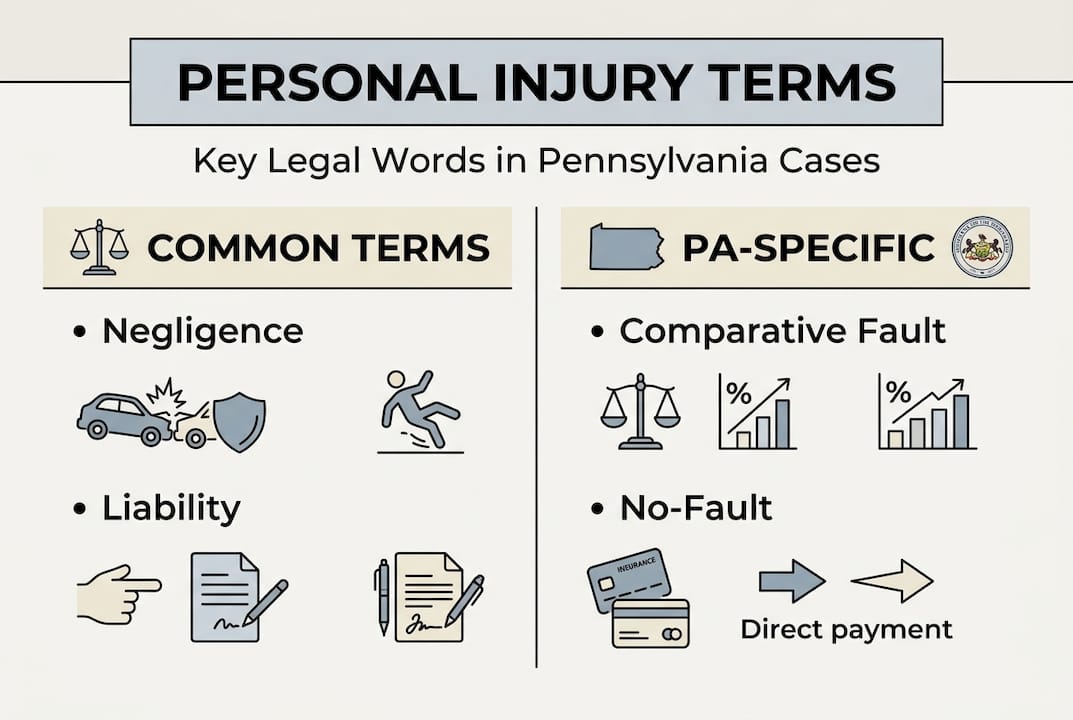
Negligence is the foundation of almost every personal injury case. It means someone failed to act with reasonable care, and that failure caused your injury. Think of a driver who runs a red light or a store owner who ignores a wet floor for hours. Fault is closely related. It describes who is legally responsible for causing the accident.
Liability takes fault one step further. It means legal responsibility, the obligation to pay for the harm caused. Damages refers to the actual losses you suffered, whether that is medical bills, lost wages, or pain and suffering. The person filing the claim is called the plaintiff, and the person being sued is the defendant.
Understanding your auto accidents in Pennsylvania rights starts with these terms, because every legal argument builds on them.
| Term | Definition | Example |
|---|---|---|
| Negligence | Failure to act with reasonable care | Driver texting and hitting your car |
| Liability | Legal responsibility to pay for harm | Store owner liable for your slip and fall |
| Damages | Losses suffered due to an injury | Medical bills, lost income, pain |
| Plaintiff | The person filing the lawsuit | You, the injured party |
| Defendant | The person being sued | The at-fault driver or business |
Personal injuries in Pennsylvania happen in many common settings:
- Motor vehicle accidents on highways and local roads
- Slip and fall incidents in stores, restaurants, or on sidewalks
- Workplace injuries on construction sites or in warehouses
- Dog bites in residential neighborhoods
- Medical malpractice in hospitals or clinics
When pursuing personal injury claims, knowing these terms helps you describe your situation accurately from the very first call with an attorney.
Pro Tip: Write down every unfamiliar term your attorney uses during your first meeting. Ask for a plain-language explanation before you leave. A good lawyer will welcome the question.
Delving deeper: Pennsylvania-specific personal injury concepts
Pennsylvania has its own rules that shape how injury cases play out. These are not just technicalities. They directly affect how much money you can recover and whether you can recover anything at all.
Modified comparative negligence is one of the most important concepts to understand. Pennsylvania follows a modified comparative negligence rule, which means your compensation is reduced by your percentage of fault. If you were 20% at fault and your damages total $100,000, you receive $80,000. But if you are found more than 50% at fault, you receive nothing. This rule makes it critical to document the accident carefully and avoid statements that could shift blame onto you.

No-fault insurance is another Pennsylvania-specific concept. Pennsylvania is a choice no-fault state, meaning drivers choose between limited tort and full tort coverage when they buy auto insurance. Limited tort restricts your right to sue for pain and suffering unless injuries are serious. Full tort preserves your right to sue for any injury. Many people do not realize which option they selected until after an accident.
The statute of limitations sets a deadline for filing your claim. In Pennsylvania, you generally have two years from the date of the accident. Miss that window and your case is almost certainly gone forever.
| Concept | Pennsylvania rule | General US practice |
|---|---|---|
| Comparative negligence | Modified, 51% bar | Varies by state |
| No-fault insurance | Choice no-fault system | Pure no-fault or tort states |
| Statute of limitations | 2 years for most injury claims | Ranges from 1 to 6 years |
Here are key actions that protect your case under Pennsylvania law:
- Report the accident to police immediately and get a copy of the report.
- Seek medical treatment right away, even if injuries seem minor.
- Check your auto insurance policy to confirm your tort selection.
- Avoid giving recorded statements to the other party's insurer.
- Consult an attorney before the two-year deadline closes in.
Knowing what to do after an auto accident in those first critical hours can make or break your case under these Pennsylvania-specific rules.
The language of settlements: From negotiation to resolution
Most personal injury cases in Pennsylvania settle before trial. That means the settlement negotiation process is where your case actually gets resolved, and the language used in that process matters enormously.
A lump sum settlement pays your entire compensation in one payment. A structured settlement spreads payments over time, often used when damages are very large or when the injured person needs ongoing income. A release of claims is a legal document you sign when you accept a settlement. It permanently ends your right to sue for that injury, so reading it carefully is not optional.
Compensatory damages cover your actual losses: medical expenses, lost wages, property damage, and pain and suffering. Punitive damages are different. They are awarded in rare cases where the defendant's behavior was especially reckless or intentional, and they are meant to punish rather than compensate. Understanding settlements in truck accident cases shows how these terms apply in high-stakes situations where multiple parties may share liability.
Common settlement negotiation terms to know:
- Demand letter: Your attorney's formal written request for compensation
- Counter-offer: The insurer's response proposing a lower amount
- Policy limits: The maximum the insurer will pay under the at-fault party's coverage
- Subrogation: Your insurer's right to recover money it paid you from the at-fault party
- Mediation: A process where a neutral third party helps both sides reach agreement
Insurance adjusters work for the insurance company, not for you. Their job is to settle claims for as little as possible. They use friendly, casual language to get you to say things that reduce your payout. Legal insights for victims highlight how quickly these conversations can shift against you without proper guidance.
Never sign a release of claims or any settlement document without your attorney reviewing it first. Once signed, that document closes the door on any future compensation for that injury, no matter what new costs arise.
Pro Tip: Keep a written log of every phone call, email, and letter you receive from insurers or adjusters. Note the date, the name of the person you spoke with, and exactly what was said. This record can be invaluable if a dispute arises later.
Beyond the dictionary: How mastering legal terms empowers your injury case
Knowing legal vocabulary is not just about sounding informed. It changes how you experience your entire case, from the first consultation to the final settlement check.
When you understand the language, you stop being a passive participant and start being an active one. You catch errors in documents. You recognize when an adjuster is using vague language to limit your claim. You understand why your attorney recommends a specific strategy. That clarity reduces anxiety and helps you make decisions based on facts rather than fear.
Effective communication helps clients advocate for themselves and achieve better outcomes, and that starts with speaking the same language as your legal team. Attorneys can spend less time explaining basics and more time building your case when you arrive prepared.
Here is how legal knowledge directly benefits your case:
- You avoid accidentally admitting fault in conversations with insurers
- You understand what your medical records and bills mean for your damages calculation
- You can evaluate whether a settlement offer is fair based on your actual losses
- You recognize unrealistic timelines and push back with accurate information
- You feel confident asking for clarification rather than nodding along and hoping for the best
Questions to ask your lawyer using your new vocabulary:
- What is my estimated percentage of fault under Pennsylvania's comparative negligence rule?
- Do my injuries qualify for full tort recovery under my insurance policy?
- What compensatory damages are we including in the demand letter?
- Is there any basis for seeking punitive damages in my case?
- What happens to my structured settlement if my medical needs change over time?
Being proactive is not about second-guessing your attorney. It is about being a true partner in your own case. The more you understand, the better your attorney can serve you.
A lawyer's perspective: Why terminology matters more than you think
Here is something most legal guides will not tell you: the clients who understand legal terms consistently get better results. Not because they become amateur lawyers, but because they trust the process more and panic less.
When a client hears "modified comparative negligence" and freezes, they often make reactive decisions, accepting low offers out of fear or missing deadlines because they did not understand the urgency. When that same client knows what the term means, they ask the right questions and stay the course.
From our experience working on successful claims in Pennsylvania, the most damaging mistakes happen in the first 72 hours after an accident, often because clients did not know what they were agreeing to or signing away. Legal literacy is not a luxury. It is a form of self-protection that costs you nothing but a little time and pays off at every stage of your case.
Do not wait until you are sitting across from an adjuster to start learning. Start now.
Get personalized support for your Pennsylvania injury case
Understanding legal terms gives you a real foundation, but applying them to your specific situation requires experienced guidance. Every personal injury case in Pennsylvania is different, and the details matter enormously.

If you were hurt in an accident and you are ready to move forward with confidence, connecting with a qualified attorney is the clearest next step. Whether you need personal injury case help, guidance on legal help for auto accidents, or simply want to understand your options, Attorney Sean Quinlan is ready to walk you through every step. Consult with Attorney Sean Quinlan today and get the personalized, plain-language support your case deserves.
Frequently asked questions
What is 'comparative negligence' in Pennsylvania personal injury cases?
Comparative negligence means your compensation is reduced by your percentage of fault, and you cannot recover damages if you are more than 50% responsible for the accident.
How long do I have to file a personal injury claim in Pennsylvania?
You typically have two years from the date of the accident to file a claim under Pennsylvania's statute of limitations, so acting quickly protects your rights.
What is the difference between compensatory and punitive damages?
Compensatory damages reimburse your actual losses like medical bills and lost wages, while punitive damages are reserved for cases involving especially reckless or intentional misconduct.
Why is understanding legal terms important in a personal injury case?
Knowing key terms lets you communicate effectively with your lawyer and helps you avoid costly mistakes that could reduce or eliminate your compensation.
Recommended
- Auto Accidents in Pennsylvania: Know Your Rights and How to Protect Them — Attorney Sean Quinlan
- Personal Injury Claims: How to Pursue Justice and Compensation — Attorney Sean Quinlan
- What to Do After an Auto Accident: Protecting Your Rights — Attorney Sean Quinlan
- What to Do After a Car Accident: Essential Steps for Protecting Your Rights — Attorney Sean Quinlan