

If you have a DUI on your record in Pennsylvania, you may be wondering whether it's possible to clear it and move forward with your life. DUI expungement explained simply means the legal process of having your criminal record destroyed or sealed so it no longer appears in public background checks. But Pennsylvania's rules are more complex than most people realize. The state offers two distinct paths: traditional expungement under state statute and automatic record sealing under the Clean Slate Act. Knowing which applies to your situation, and what each actually does, is the first step toward taking real action.
Table of Contents
- Key Takeaways
- DUI expungement explained: Pennsylvania's legal framework
- Who actually qualifies for DUI expungement
- The step-by-step process for filing in Pennsylvania
- Benefits and limitations of clearing your DUI record
- Common challenges and how to avoid them
- My perspective on navigating this process
- How Pennsylvaniadui can help you move forward
- FAQ
Key Takeaways
| Point | Details |
|---|---|
| Two separate relief options | Pennsylvania offers both judicial expungement (record destruction) and Clean Slate automatic sealing, and they work very differently. |
| Limited DUI expungement eligibility | Most DUI convictions do not qualify for full expungement; ARD completions, non-convictions, and summary offenses are the primary pathways. |
| Timing matters significantly | Automatic sealing has fixed waiting periods, and even after a court order, full record clearance can take up to one year. |
| DMV records are not affected | Expunging a criminal record does not remove a DUI from your DMV driving record, which insurance companies can still access. |
| Attorney guidance reduces errors | Filing mistakes, missed deadlines, and misunderstanding eligibility criteria are common pitfalls that legal counsel helps you avoid. |
DUI expungement explained: Pennsylvania's legal framework
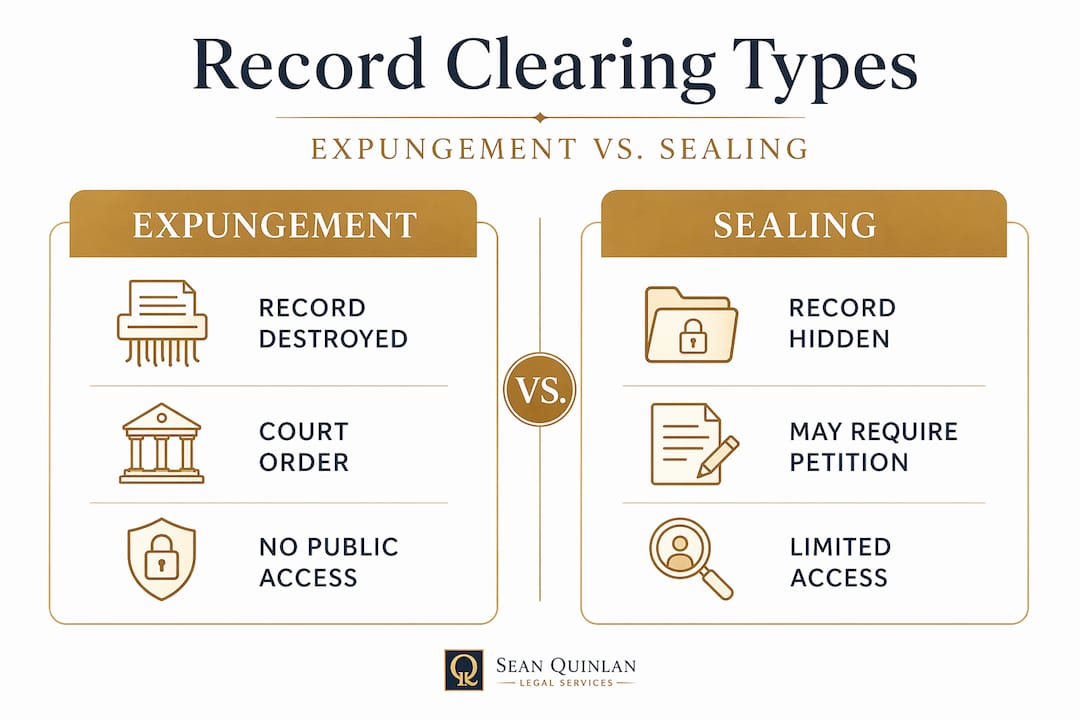
Pennsylvania takes a dual approach to clearing criminal records. The first path is traditional expungement under 18 Pa.C.S. § 9122, which results in the physical and digital destruction of your record. The second path is limited-access sealing under the Clean Slate Act, specifically 18 Pa.C.S. § 9122.2, which hides records from public view without destroying them.
These two options are not interchangeable. Expungement removes records from public view entirely, including background checks run by employers, landlords, and schools. Sealing, by contrast, keeps your record hidden from the general public but still allows courts, law enforcement, state licensing boards, and child protective services to access it. That distinction matters a great deal depending on your profession and circumstances.
The Clean Slate Act (Act 36 of 2023) expanded relief options significantly. It created automatic sealing timelines without requiring you to file a petition:
- Non-convictions (charges dismissed or withdrawn): automatically sealed after 30 days
- Summary convictions: automatically sealed after 5 years conviction-free
- Eligible misdemeanors: automatically sealed after 7 years conviction-free
- Some drug felonies: automatically sealed after 10 years conviction-free
The key phrase is "automatically." You do not need to hire an attorney or file paperwork for these categories, though understanding whether your specific offense qualifies is where things get nuanced. For full expungement (complete destruction), you generally must file a petition with the court.
| Relief Type | Record Outcome | Who Can Still See It | Petition Required |
|---|---|---|---|
| Full expungement | Record destroyed | No one | Yes |
| Clean Slate sealing | Record hidden | Law enforcement, courts, licensing boards | No (automatic) |
Who actually qualifies for DUI expungement
DUI expungement eligibility in Pennsylvania is genuinely limited, and this is where many people get disappointed. Understanding the DUI expungement criteria upfront saves considerable time and frustration.
The clearest qualifying categories for full expungement are:
- Non-convictions: If your DUI charge was dismissed, withdrawn, or resulted in a not-guilty verdict, the arrest record qualifies for expungement.
- ARD program completion: Accelerated Rehabilitative Disposition (ARD) is a diversionary program for first-time offenders. Completing it successfully makes you eligible to expunge your DUI record.
- Summary offenses: These minor offenses can be expunged after 5 years without a subsequent conviction.
- Age exceptions: If you were 21 or older at the time and are now 70 or older, or if you have been deceased for 3 years, expungement is available regardless of offense type.
- Governor's pardon: A full pardon from the Governor of Pennsylvania opens the door to expunging offenses that would otherwise be ineligible.
Felony DUI charges fall outside the reach of standard expungement. Aggravated assault by vehicle while DUI, homicide by vehicle while DUI, and other serious DUI-related felonies generally cannot be expunged without a Governor's pardon. If your DUI resulted in a felony conviction, understanding the implications of that record is worth reading more about in relation to third-offense DUI consequences.
One critical eligibility factor people often overlook: outstanding restitution. If you owe restitution as part of your sentence and have not paid it, courts will typically deny an expungement petition. You must also have completed all probation or supervision periods before filing.
Pro Tip: Before assuming you do not qualify, verify whether your DUI was charged as a misdemeanor or felony and whether you completed ARD. Many people who went through ARD years ago are eligible for expungement right now and simply do not know it.
The step-by-step process for filing in Pennsylvania
Understanding how to expunge a DUI record in Pennsylvania requires knowing there are two separate procedural tracks depending on which relief type you pursue.
For Clean Slate automatic sealing, the process is passive. The court system is supposed to apply it automatically once the waiting period has passed. You do not pay a fee or file anything. That said, errors in automated systems do occur, so verifying your record status after the waiting period is wise.
For petition-based expungement, the process involves these steps:
- Confirm eligibility. Review your case outcome, charge level, and whether you completed ARD or all sentence conditions.
- Obtain your criminal history. Request a copy from the Pennsylvania State Police to confirm what appears on your record.
- Prepare and file the petition. File with the Court of Common Pleas in the county where the charges were filed. Filing fees typically run $132 to $215 depending on the county.
- Serve the District Attorney. The DA's office receives a copy and has the opportunity to object. Most ARD-based petitions go uncontested, but contested cases require a hearing.
- Attend a hearing if required. If the DA objects, a judge will review arguments and make a ruling.
- Receive the court order. If the judge grants expungement, a signed order is issued directing agencies to destroy records.
- Wait for full implementation. This is where most people are surprised. In Allegheny County, completion can take up to one year after the judge signs the order, because the Department of Court Records must notify multiple agencies including Adult Probation, the Bureau of Criminal Investigations, the District Attorney, and the Pennsylvania State Police.
- Verify your record. Run a background check or request a new criminal history from the State Police to confirm the record has been cleared.
Pro Tip: Do not assume your record is clean the day after a judge signs an expungement order. Downstream agencies need time to process changes. Wait several months, then request an official criminal history report to confirm clearance.
The typical resolution timeline for a petition-based expungement, from filing to a judge's decision, runs approximately 4 to 6 months. Add the post-order implementation period, and you could be looking at close to a year and a half from start to finish.

Benefits and limitations of clearing your DUI record
The benefits of DUI expungement are real and meaningful. A cleared or sealed record removes a significant barrier in several areas of your life.
"An expunged DUI record no longer appears on standard background checks, which means employers, landlords, and educational institutions conducting routine screening will not see it. For many people, this single outcome opens doors that have been closed for years."
In practical terms, expungement or sealing can improve your chances of securing employment, qualifying for an apartment lease, gaining admission to educational programs, and obtaining certain professional licenses. Some licensing boards, particularly in healthcare and education, still conduct enhanced background checks that may access sealed records. Knowing your specific board's access level before applying is worth investigating through the DUI expungement record clearing process in detail.
That said, several important limitations apply:
- DMV driving records are separate. DUI convictions typically remain on your driving record for 5 to 10 years even after a criminal record is cleared. Insurance companies access DMV records, not criminal databases, so your insurance rates may not immediately improve.
- Law enforcement retains access to sealed records. If you are stopped again or face another criminal matter, officers can still see sealed convictions.
- Federal background checks differ. Federal employment and security clearance investigations use broader databases that may not fully reflect a state expungement.
- Civil obligations remain. Expungement does not erase civil judgments, fines, or other financial obligations tied to your case.
Understanding what expungement cannot erase helps you set realistic expectations rather than being blindsided later.
Common challenges and how to avoid them
One of the most persistent obstacles in the DUI record sealing process is the gap between getting a court order and actually having a clean record. Many people walk out of court thinking the matter is resolved, only to find their record still appearing in background checks months later. Practitioners consistently advise clients to monitor their record status after an order is granted, not to assume the administrative work is done automatically.
Another frequent problem is confusing Clean Slate sealing with full expungement. Many Pennsylvanians misunderstand what each option actually accomplishes, leading them to believe their record is fully destroyed when it is only hidden from certain viewers. The distinction matters most when applying for jobs with law enforcement background access or professional licenses.
Filing errors, such as submitting a petition in the wrong county, omitting required documentation, or filing before all sentence conditions are complete, delay the process significantly. An attorney familiar with Pennsylvania's courts can catch these issues before they become problems.
Pro Tip: If you completed ARD more than a year ago and have not filed for expungement, do it now. There is no benefit to waiting, and every additional year is a year that record has been potentially affecting your opportunities.
My perspective on navigating this process
I have worked with clients across Pennsylvania who came to me frustrated and confused about why their record had not been cleared, even after being told they qualified for expungement. In nearly every case, the confusion traced back to one of two things: either they did not fully understand which type of relief applied to them, or they expected an immediate outcome after the court order was signed.
What I have learned over years of handling these cases is that patience is not optional in this process. It is baked into the system. When a judge grants expungement, that is the beginning of the administrative process, not the end. Agencies need to be notified. Records need to be physically or digitally destroyed. State Police databases need to be updated. Telling clients to run a background check on themselves three to six months after an order is granted is advice I give in every single case.
I have also seen clients miss their window for ARD-based expungement simply because they waited too long to act and then faced a new legal issue that reset their eligibility clock. The Clean Slate provisions are genuinely helpful, but automatic sealing eligibility nuances are easy to misread without legal guidance.
My honest take: if you qualify, file as soon as possible. Do not let confusion about timing or process convince you the effort is not worth it. For most people, clearing a DUI record changes their professional and personal trajectory in concrete, measurable ways.
— Sean
How Pennsylvaniadui can help you move forward
If you are working through the questions raised in this article and are not sure whether your DUI qualifies for expungement or sealing, speaking with an attorney who knows Pennsylvania law is the fastest way to get clarity.

Attorney Sean Quinlan at Pennsylvaniadui has extensive experience handling DUI defense and expungement matters across multiple Pennsylvania counties. Whether you are at the beginning of a DUI charge or years past a conviction and wondering what your options are, the DUI legal services offered through Pennsylvaniadui are built around your specific circumstances. From evaluating your eligibility to preparing and filing a petition correctly, the goal is to reduce the stress of this process and give you the best realistic outcome. Contact Pennsylvaniadui today to schedule a consultation and get a clear picture of where you stand.
FAQ
Can a DUI be erased from your record in Pennsylvania?
A DUI can be expunged in Pennsylvania if you completed ARD, received a non-conviction outcome, or qualify under limited exceptions. Felony DUI convictions generally require a Governor's pardon before expungement is possible.
How long does the DUI expungement process take in Pennsylvania?
Petition-based expungements typically take 4 to 6 months to reach a court decision, but full record clearance across all agencies can take up to one year after the judge signs the order.
What is the difference between expungement and record sealing?
Expungement results in the physical destruction of your record and removes it from all background checks. Sealing hides the record from public view but keeps it accessible to law enforcement, courts, and certain licensing agencies.
Does expunging a DUI affect your driving record?
No. Expunging a criminal DUI record does not remove the offense from your DMV driving record. DUI convictions typically remain on driving records for 5 to 10 years and are still visible to insurance companies.
Do you need an attorney to file for DUI expungement in Pennsylvania?
Pennsylvania does not require an attorney for expungement filings, but errors in eligibility assessment, documentation, or county-specific procedures are common. Legal guidance significantly reduces the risk of delays or denials.
Recommended
- Understand DUI conviction consequences in Pennsylvania
- DUI Checkpoints in Pennsylvania: What Are Your Rights? — Attorney Sean Quinlan
- DUI Expungement in Pennsylvania: Clearing Your Record — Attorney Sean Quinlan
- Second DUI Offense in Pennsylvania: Enhanced Penalties and Mandatory Minimums — Attorney Sean Quinlan