

A DUI arrest in Pennsylvania hits fast, and the confusion that follows can feel overwhelming. You may not know what to say, what to sign, or what comes next. The decisions you make in the first hours and days after an arrest can shape every stage that follows, from whether you keep your license to whether you face jail time. Pennsylvania's DUI process has distinct steps, each with its own deadlines, legal rights, and consequences. This article breaks down every stage clearly so you understand your options, know what to expect, and can take action before a small mistake turns into a much bigger problem.
Table of Contents
- Step 1: Traffic stop, field tests, and chemical testing
- Step 2: Arrest, booking, and preliminary arraignment
- Step 3: Hearings, ARD program, and progressing through court
- Step 4: Sentencing, penalties, and PennDOT consequences
- What most people miss about DUI process steps in PA
- Need help navigating the Pennsylvania DUI process?
- Frequently asked questions
Key Takeaways
| Point | Details |
|---|---|
| Initial steps matter | How you handle testing and your rights at the traffic stop can impact your entire DUI case. |
| Process moves quickly | Expect arraignment and hearings within days or weeks after arrest—missing deadlines can cost options. |
| Penalty tiers escalate | DUI consequences increase with higher blood alcohol, prior offenses, or aggravating factors in Pennsylvania. |
| Consider ARD for first offense | First-time offenders may avoid a criminal record through ARD if they qualify, but must act quickly. |
| Civil penalties apply, too | PennDOT handles license suspensions and fees separately from criminal court—both affect your driving future. |
Step 1: Traffic stop, field tests, and chemical testing
Let's start with what happens at the roadside: the initial traffic stop and testing.
Every DUI case begins here. Police must have reasonable suspicion to pull you over, meaning they observed something specific, like swerving, a broken taillight, or speeding. A hunch alone is not enough. Once stopped, an officer will look for signs of impairment through your speech, eyes, and behavior.
Officers may then ask you to perform field sobriety test rights exercises, like walking in a straight line or standing on one leg. These tests are voluntary in Pennsylvania. Many people do not realize they have the right to decline them. Performance on these tests, even when sober, is often used as justification for arrest.
Chemical testing is different. Under Pennsylvania's implied consent law, by driving on Pennsylvania roads you have already agreed to submit to blood, breath, or urine testing if lawfully arrested. Here is what you need to know:
- You can refuse a pre-arrest breathalyzer (a portable device at the roadside)
- Post-arrest chemical testing refusal triggers automatic PennDOT license suspensions
- Refusal does not prevent prosecution and may actually be used as evidence against you
- Test results fall into three tiers that determine how serious your penalties will be
Key fact: Refusal of chemical testing leads to an automatic 12-month license suspension by PennDOT, separate from any court outcome.
At DUI checkpoints, the rules are slightly different. Officers can briefly stop every car, but they still need probable cause to require testing. Know your DUI checkpoint rights before you are ever in that situation.
Pro Tip: Stay calm and polite at every stop. Your behavior, including body camera and dashcam footage, will likely appear later in court.
Step 2: Arrest, booking, and preliminary arraignment
Once the roadside phase ends with an arrest, the case quickly moves to formal legal steps.
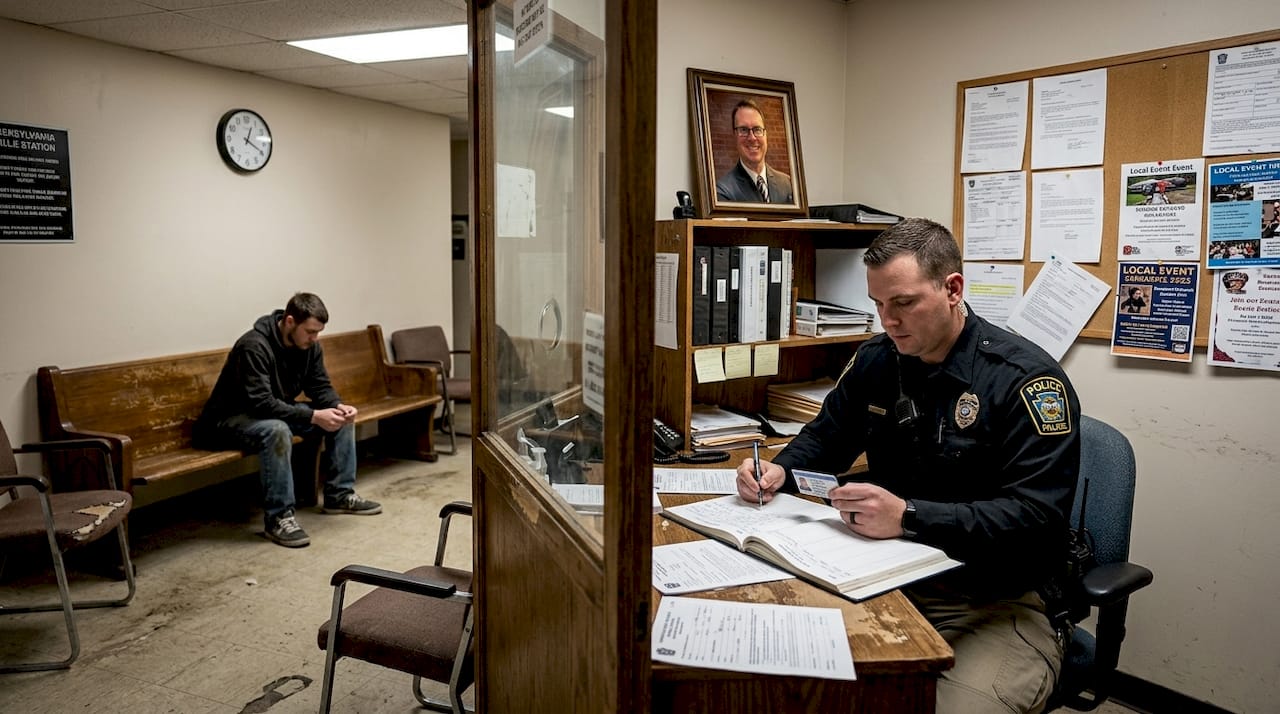
After handcuffs go on, you are transported to a police station or processing center. Booking collects your fingerprints, photograph, and personal information. Your property is inventoried and held. If you were impaired, you may be held until you are sober.
Here is the general sequence of what follows:
- Booking and processing at the station (typically same night)
- Bail determination based on your charges, history, and flight risk
- Preliminary arraignment held within 24-72 hours where charges are formally read and your initial plea is entered
- Criminal complaint filing must happen within 5 days under Pennsylvania law
- Preliminary hearing scheduled, usually within 14-21 days after arraignment
Important timeline: Under Rule 519(B), a criminal complaint must be filed within 5 days of your arrest. Violations of this rule can sometimes be raised as a defense, though courts weigh reasonableness before considering dismissal.
Here is what happens at each stage:
| Stage | Typical timeframe | Your options |
|---|---|---|
| Booking | Same day as arrest | Request an attorney immediately |
| Preliminary arraignment | 24 to 72 hours | Plead not guilty to preserve options |
| Bail hearing | Same as arraignment | Request reasonable bail conditions |
| Preliminary hearing | 14 to 21 days later | Challenge probable cause |
At the preliminary hearing process, a judge reviews the evidence to decide if there is enough probable cause to send your case to a higher court. You can waive this hearing or use it strategically to hear the Commonwealth's evidence early.
At every one of these stages, having an attorney already in your corner makes a real difference. Many people wait too long to get legal help and miss important opportunities.
Step 3: Hearings, ARD program, and progressing through court
After arraignment, the case may move forward to a preliminary hearing or, for eligible first-time offenders, toward ARD.
The preliminary hearing occurs within 30-60 days of arrest. If the judge finds probable cause, your case advances to Court of Common Pleas. From there, the path includes formal arraignment, discovery (where both sides share evidence), pre-trial motions, plea negotiations, and possibly trial.
But there is a separate path worth knowing about: the ARD program. ARD stands for Accelerated Rehabilitative Disposition. It is a pre-trial diversion program available to first-time eligible offenders who meet specific conditions. Here is how the two paths compare:
| Factor | Standard court path | ARD program |
|---|---|---|
| Eligibility | All defendants | First-time offenders, no serious priors |
| Outcome | Possible conviction | No conviction if completed |
| Record | Permanent criminal record | Eligible for expungement |
| Duration | Varies, often 6 to 18 months | Probation, typically 6 to 12 months |
| License impact | Suspension likely | Shorter suspension possible |
ARD typically requires probation, DUI safety school attendance, community service, and payment of program fees. If you complete all requirements, your case is dismissed and you can petition for expungement, meaning the arrest is removed from your record.
- ARD is not automatic. You must apply and be approved by the district attorney
- Certain factors like accidents causing injury or very high BAC can disqualify you
- ARD is only available once in Pennsylvania
Pro Tip: Apply for ARD as early as possible. Some counties have backlogs, and waiting too long can affect your eligibility window.
Whether DUI is criminal or civil often depends on factors like BAC level, prior offenses, and whether anyone was hurt. ARD is one of the few ways to avoid a permanent criminal record entirely.
Step 4: Sentencing, penalties, and PennDOT consequences
Once the judge reaches a decision or you take a plea, sentencing and PennDOT actions take center stage.
Pennsylvania uses a 3-tier DUI system based on your blood alcohol content and whether drugs were involved. Penalties escalate sharply with each tier and with each repeat offense.
| Tier | BAC range | First offense penalties |
|---|---|---|
| Tier 1 (General Impairment) | 0.08 to 0.099% | Up to 6 months probation, $300 fine |
| Tier 2 (High BAC) | 0.10 to 0.159% | 48 hours to 6 months jail, $500 to $5,000 fine |
| Tier 3 (Highest BAC) | 0.16% and above | 72 hours to 6 months jail, $1,000 to $5,000 fine |
Repeat offenses dramatically increase these numbers. A third Tier 3 offense can bring 1 to 5 years in prison and fines up to $10,000. Drug DUI cases and underage DUI are treated under special rules that often align with Tier 2 or Tier 3 consequences.
Reality check: Penalties escalate with tier level and prior offenses, and the difference between Tier 1 and Tier 3 sentencing can be the difference between probation and prison.
Apart from court sentencing, PennDOT runs a separate civil track. A high BAC conviction or test refusal triggers immediate suspension of your driving privileges. Restoration requires completing DUI safety school, undergoing treatment if required, paying restoration fees, and installing an ignition interlock device on your vehicle.
Ignition interlock requires you to breathe into a device before starting your car. It stays on your vehicle for 12 months or more depending on offense level. A limited license is sometimes available so you can drive to work or medical appointments during suspension.
For a full breakdown of how penalties compare across offenses, the DUI penalties by offense resource explains every tier and the mandatory DUI penalties that apply at each level.
What most people miss about DUI process steps in PA
With the steps mapped out, it is worth stepping back to look at what actually determines real outcomes, not just the law on paper.
Most people focus entirely on the criminal court process and forget that PennDOT is running a separate civil track at the same time. You could win in court and still lose your license because you missed a PennDOT deadline or failed to enroll in the required safety school. These two tracks do not wait for each other.
The 5-day rule is another area where people assume a technicality will save them. A 5-day rule violation may open a defense but courts assess reasonableness rather than automatically dismissing the case. Counting on procedural errors to rescue your case is a gamble that usually does not pay off.
ARD is one of the most valuable tools in Pennsylvania DUI law, yet many first-time defendants never even hear about it until it is too late to apply in time. Asking about ARD on day one, not week six, is one of the most important things you can do.
Finally, challenging breathalyzer results and other evidence early in the process can fundamentally change what the prosecution has to work with. Waiting to see how things develop is the worst strategy. Every stage has a window, and windows close fast.
Need help navigating the Pennsylvania DUI process?
Knowing the steps is useful. Having someone in your corner who knows how to work them is what actually protects your future.

At pennsylvaniadui.attorney, Attorney Sean Quinlan brings focused Pennsylvania DUI experience to every case, from first contact through final resolution. Whether you are looking at ARD eligibility, license restoration, or fighting the charges outright, the right guidance from day one leads to the most options. Visit the Pennsylvania DUI legal support page to learn more about how the firm handles cases across Pennsylvania counties and to request your case evaluation. The sooner you act, the more options remain open.
Frequently asked questions
How long does the Pennsylvania DUI process usually take?
The process typically takes 3 to 6 months from arrest to conclusion, depending on case complexity, court calendars, and whether ARD is pursued. A preliminary hearing within 30-60 days is an early milestone in that timeline.
What happens if I refuse a chemical test during a DUI stop?
Refusing chemical testing triggers an automatic license suspension by PennDOT, even if you are later found not guilty in court. This refusal suspension is a civil action separate from any criminal proceedings.
Am I eligible for the ARD program on my first DUI arrest?
If you are a first-time DUI offender and meet the district attorney's conditions, you may qualify for ARD. First-time eligible offenders who complete the program can petition to have the arrest expunged from their record.
What are the main differences between DUI penalties for Tier 1, 2, and 3?
Tier 1 carries the lightest penalties like probation and small fines, while Tiers 2 and 3 bring mandatory jail time, larger fines, longer license suspensions, and ignition interlock requirements. Penalties escalate by tier and increase further for repeat offenses.
Is a Pennsylvania DUI a criminal or civil matter?
A DUI in Pennsylvania can trigger both criminal charges and civil penalties like license suspension through PennDOT. Whether DUI carries criminal consequences depends on factors like BAC level, injury, and prior history, though ARD can help avoid a permanent criminal record.
Recommended
- DUI Checkpoints in Pennsylvania: What Are Your Rights? — Attorney Sean Quinlan
- Understanding Pennsylvania DUI Laws in 2025: What Every Driver Needs to Know — Attorney Sean Quinlan
- Pennsylvania DUI Penalties: What Every Offender Must Know
- DUI Expungement in Pennsylvania: Clearing Your Record — Attorney Sean Quinlan