

Facing a DUI charge in Pennsylvania is frightening, especially when you don't know what the prosecution is building against you. The evidence stacked in a DUI case isn't just a breathalyzer reading. It can include police narratives, video footage, your social media activity, and even the simple act of refusing a test. Understanding what types of evidence exist, how each one is used, and where each can be challenged gives you a real advantage before your first court appearance. This guide breaks it all down so you know exactly what you're dealing with.
Table of Contents
- Types of evidence used in Pennsylvania DUI cases
- Chemical test results: The backbone of DUI prosecution
- Observational and field sobriety evidence
- Digital and social media evidence: Modern risks
- Chemical test refusal: Automatic penalties and tough evidence
- Comparison: How DUI evidence types impact case outcomes
- The uncomfortable truth about DUI evidence in Pennsylvania
- Connect with Pennsylvania DUI experts for strategic defense
- Frequently asked questions
Key Takeaways
| Point | Details |
|---|---|
| Multiple evidence types count | Pennsylvania prosecutors use chemical, observational, digital, and refusal evidence in DUIs. |
| Chemical tests carry most weight | BAC and drug test results are central to most convictions but can be challenged. |
| Refusals trigger harshest penalties | Refusing a test leads to the maximum tier of penalties and immediate license suspension. |
| Social media can hurt your case | Online posts and messages may be discovered and admitted as evidence in Pennsylvania courts. |
| Legal advice is critical | A qualified attorney can dissect evidence types, suppress weak evidence, and improve your outcome. |
Types of evidence used in Pennsylvania DUI cases
Now that you know why evidence is so important, let's break down each evidence type you may encounter in a Pennsylvania DUI case. Pennsylvania DUI laws create a framework where multiple evidence types can work together to build a case against you. The more you understand each category, the better prepared you'll be when sitting down with your attorney.
The major evidence types in a Pennsylvania DUI case include:
- Observational evidence: Police officer testimony describing your driving behavior, speech patterns, physical appearance, and demeanor at the stop
- Dash and body cam footage: Video recordings that can either support or contradict what an officer reports
- Field sobriety test results: Standardized tests like the walk-and-turn, one-leg stand, and horizontal gaze nystagmus (HGN)
- Chemical test results: Blood, breath, or urine tests that measure blood alcohol content (BAC) or the presence of drugs
- Digital and social media evidence: Posts, photos, check-ins, location tags, and text messages that can place you at a bar or show drinking activity
- Test refusals: Refusing a chemical test triggers its own set of legal consequences and can be used as evidence against you in court
Each of these categories carries a different weight in court, and each offers different opportunities for a skilled defense attorney to scrutinize, challenge, or discredit the evidence. Let's dig deeper into each one.
Chemical test results: The backbone of DUI prosecution
Chemical evidence sits at the center of nearly every Pennsylvania DUI prosecution. A blood alcohol content reading above 0.08% creates a legal presumption that you were impaired, and DUI penalties by BAC tier are directly tied to how high that number goes.
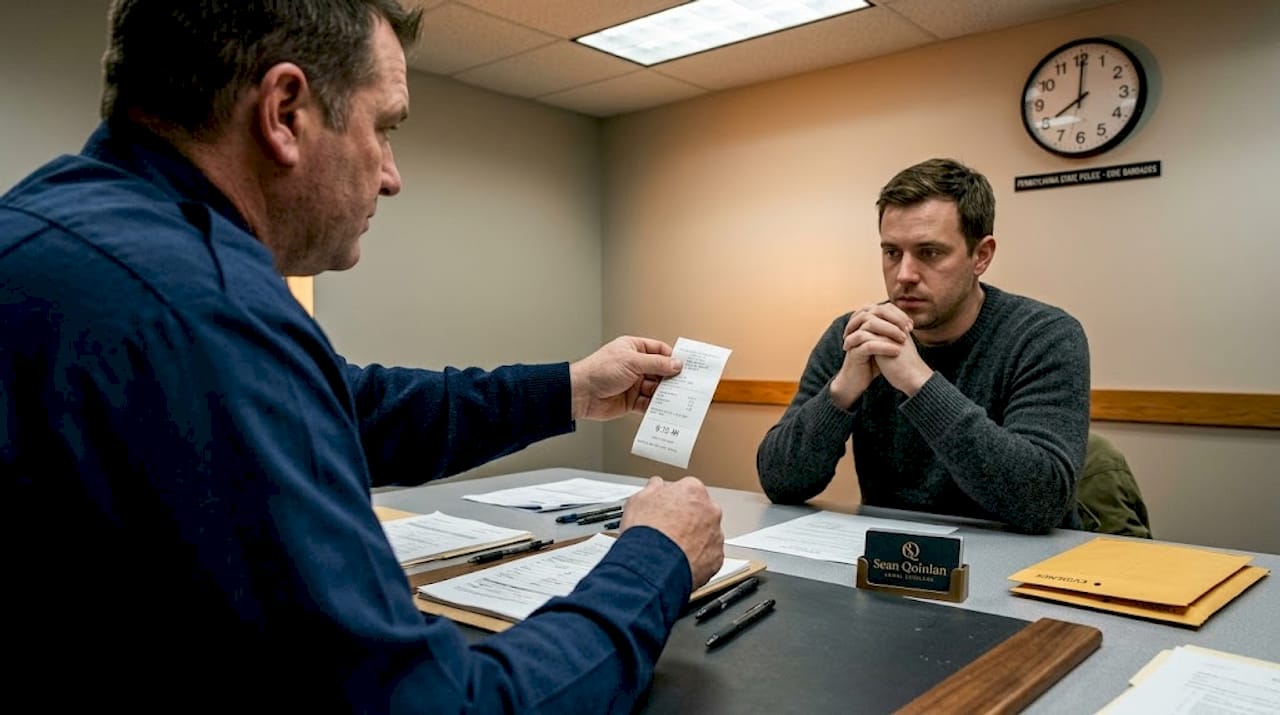
According to PennDOT impaired driving data, Pennsylvania recorded 40,823 DUI arrests in 2023, with 28,020 drugged driving charges accounting for over 35% of all DUI charges. That means more than one in three DUI cases in Pennsylvania now involves drugs rather than alcohol alone. This shift matters because drug-impaired driving cases rely more heavily on blood tests, which introduce additional variables your attorney can examine.
Pennsylvania structures DUI penalties into three tiers based on BAC or test findings:
| Tier | BAC range | Key consequences |
|---|---|---|
| Tier 1 (General impairment) | 0.08% to 0.099% | Lower fines, possible ARD (Accelerated Rehabilitative Disposition) |
| Tier 2 (High BAC) | 0.10% to 0.159% | Higher fines, mandatory jail time increases with prior offenses |
| Tier 3 (Highest BAC or refusal) | 0.16% or above, or test refusal | Steepest fines, longest license suspension, mandatory alcohol highway safety school |
Refusal is automatically treated as a Tier 3 offense, even if your actual BAC might have been lower. That's a critical point many defendants don't fully appreciate until after they've refused testing.
Chemical test results can be challenged, but it requires detailed legal work. Your attorney may look at how the breathalyzer was calibrated, whether the device was certified, how blood samples were stored and handled, and whether proper procedures were followed. Challenging breathalyzer results is a legitimate and sometimes successful legal strategy. However, it's not a guarantee. The State leans heavily on chemical evidence, and judges are accustomed to seeing it.
Pro Tip: Request all documentation related to breath or blood testing equipment, including calibration logs and maintenance records. Gaps in these records are one of the most common grounds for challenging test results.
Observational and field sobriety evidence
Police observations form the narrative backbone of your DUI case. From the moment an officer sees your vehicle, they're building a mental record. Weaving across lanes, stopping too late, or even driving too cautiously can all be noted as signs of impairment. Once you're stopped, they observe your eyes (bloodshot or watery), your speech (slurred or confused), your coordination, and your overall behavior.
Dash cam and body cam footage has become an increasingly important piece of the puzzle. Video doesn't lie, or at least it doesn't exaggerate. If an officer's written report says you were stumbling and slurring but the video shows you speaking clearly and walking steadily, that contrast can be powerful in your defense. Alternatively, video can firmly support what the officer reports, leaving you with less room to contest.
Field sobriety tests (FSTs) are the three standardized tests developed by the National Highway Traffic Safety Administration (NHTSA):
- Horizontal Gaze Nystagmus (HGN): The officer watches your eye movements as you follow a moving object. Involuntary eye jerking is considered a sign of impairment.
- Walk-and-turn: You walk a straight line heel to toe, turn, and walk back. Officers watch for balance, step count, and turning execution.
- One-leg stand: You stand on one leg for 30 seconds while counting aloud. Balance and focus are assessed.
These tests sound straightforward, but they're far from foolproof. Medical conditions, physical limitations, uneven road surfaces, footwear, and anxiety can all affect performance. According to PennDOT impaired driving data, successful challenges often suppress improper testimony or tests when those tests weren't administered correctly.
Important: If an officer failed to follow NHTSA-approved procedures during a field sobriety test, or if you have a documented medical condition affecting coordination or balance, that test's results may be excludable from evidence.
Attending DUI preliminary hearings is often the first formal opportunity to identify weaknesses in observational evidence. Don't skip this step.
Digital and social media evidence: Modern risks
Some types of evidence even create harsher penalties, and seemingly small choices made online can change a case's course entirely. Most defendants don't think twice about posting a photo at a bar or texting a friend about a night out. Prosecutors do.
Here's how digital and social media evidence can surface in your DUI case:
- Facebook, Instagram, and Snapchat posts: A photo tagged at a bar at 10 PM, followed by your traffic stop at midnight, creates a clear timeline for prosecutors
- Stories and temporary content: Even posts that "disappear" after 24 hours can be screenshot by others or preserved by investigators
- Location tags: A check-in at a local bar or brewery adds geographic context that connects you to drinking activity
- Text messages and group chats: Prosecutors can subpoena text messages. "Heading out, had a few already" can carry serious weight in court
- Search history and app activity: Rideshare searches or GPS data can be part of digital forensic evidence in serious cases
According to published reports on social media DUI evidence, social media posts showing location or activities and refusal of chemical tests can both be used against a defendant in court. Many defendants are genuinely shocked when old posts or forgotten messages show up in hearings.
The methods used to gather and authenticate social media evidence are surprisingly rigorous. Prosecutors rely on digital forensics methods to extract and verify content, including metadata that reveals when an image was taken or a post was made, not just when it was published.
Pro Tip: After a DUI arrest, avoid posting anything on social media about the incident, your night out, or your legal situation. Even a seemingly innocent comment can be screenshotted and used out of context.
Chemical test refusal: Automatic penalties and tough evidence
With all evidence types in mind, understanding what test refusal actually costs you is essential. Pennsylvania operates under implied consent law, meaning that by driving on Pennsylvania roads, you legally agree to submit to chemical testing if lawfully stopped for DUI. Refusing that test doesn't make the evidence disappear. It creates new evidence against you.
Here's a direct comparison of what happens when you test versus when you refuse:
| Scenario | Immediate consequence | Court impact | Penalty tier |
|---|---|---|---|
| BAC 0.08 to 0.099% | License suspension | Chemical evidence used | Tier 1 |
| BAC 0.10 to 0.159% | License suspension | Strong chemical evidence | Tier 2 |
| BAC 0.16% or higher | License suspension | Strongest chemical evidence | Tier 3 |
| Test refusal | Automatic license suspension | Refusal used against you | Tier 3 (automatic) |
The PA implied consent law makes it clear: you lose your license even before your DUI case is resolved, just for refusing. And PennDOT data confirms that refusal impacts outcomes severely with Tier 3 penalties and suspension even before conviction.
The idea that refusing prevents prosecution is a myth that hurts defendants. Prosecutors present refusal to juries as consciousness of guilt, essentially arguing you refused because you knew you were impaired. That's a tough narrative to overcome without experienced legal help.
Comparison: How DUI evidence types impact case outcomes
Let's step back and consider what many defense guides miss about these evidence types and your real-life strategic options.
| Evidence type | Prosecution strength | Defensibility | Key vulnerability |
|---|---|---|---|
| Chemical test results | Very high | Moderate | Calibration errors, chain of custody issues |
| Police observations | Moderate to high | Moderate to high | Subjectivity, video contradictions |
| Field sobriety tests | Moderate | High | Improper administration, medical conditions |
| Digital and social media | Variable | Moderate | Authentication challenges, context disputes |
| Test refusal | High (Tier 3 automatic) | Low | Very limited defense options |
Understanding this comparison helps you and your attorney prioritize where to focus your defense efforts. Chemical evidence is hard to eliminate entirely but can be weakened through procedural arguments. Observational evidence relies on officer credibility, which video increasingly tests. Social media evidence is often underestimated until it surfaces during discovery.
If your case results in a conviction, knowing about DUI record expungement options in Pennsylvania can help you plan for life after a DUI. Not every conviction follows you forever.
The uncomfortable truth about DUI evidence in Pennsylvania
Here's what most people get wrong when they think about DUI evidence: they assume the big pieces are the deciding factors. A failed breathalyzer feels conclusive. A police officer's sworn testimony feels impossible to fight. And because of that assumption, many defendants accept outcomes they shouldn't.
The reality is that cases are frequently won or lost on procedural details that nobody talks about. Was the breathalyzer calibrated within the required timeframe? Did the officer conducting the HGN test have current NHTSA certification? Was the blood sample stored at the correct temperature throughout the chain of custody? Did the arresting officer have proper probable cause to initiate the traffic stop in the first place? These questions don't make for dramatic headlines, but they're exactly the kind of details that lead to suppressed evidence and dismissed charges.
What genuinely breaks cases open is the ability to spot the weak link in the prosecution's chain. One improperly administered field sobriety test can undermine the credibility of everything the officer says. One miscalibrated device can call the entire BAC reading into question. One social media post viewed without context can be reframed entirely when properly explained.
Defendants also consistently underestimate digital evidence. They think about breathalyzers and field tests, but forget that a Snapchat story from two hours before their arrest exists. Your online presence is now part of your legal exposure, and ignoring it doesn't make it go away.
The other major misconception is that refusing chemical testing is a smart move. It isn't. For most defendants, it trades one piece of evidence for an automatic Tier 3 penalty and gives prosecutors a "consciousness of guilt" argument they love to use. The new DUI law changes under Act 58 of 2025 have also strengthened certain prosecution tools, so staying current on how the law has evolved is critical.
The best approach is to remain proactive, not passive. Gather everything early, share nothing publicly, and get legal counsel before making any statements. The evidence landscape in Pennsylvania DUI cases is complex, but it's navigable when you understand the terrain.
Connect with Pennsylvania DUI experts for strategic defense
The difference between a conviction and a reduced charge often comes down to how well your attorney understands and challenges the evidence in your specific case. Whether you're dealing with chemical test results, field sobriety disputes, or unexpected digital evidence, you need someone in your corner who knows every angle.

At pennsylvaniadui.attorney, Attorney Sean Quinlan and his team focus exclusively on helping Pennsylvania residents navigate DUI charges with strategic, evidence-focused defense. From case evaluations to full courtroom representation, they bring real experience to every case. If you're ready to understand your options and take control of your situation, explore Pennsylvania DUI defense services today. A free consultation could be the most important step you take right now.
Frequently asked questions
What happens if I refuse a breath or blood test during a Pennsylvania DUI stop?
Test refusal triggers an automatic license suspension and Tier 3 penalties even before a DUI conviction is entered, according to PennDOT impaired driving rules. You lose driving privileges immediately and face the harshest penalty tier regardless of actual impairment.
Can social media or text messages be used as evidence in my DUI case?
Yes, posts, photos, or messages about your location or drinking activity can be admitted in court and referenced by prosecutors. Social media evidence in DUI cases includes check-ins, tagged photos, and even private messages obtained through subpoena.
Is it possible to challenge chemical test results in Pennsylvania?
Yes, you can challenge how the test was administered, whether the device was properly calibrated, or whether correct chain of custody procedures were followed, which can lead to suppression of the evidence. An experienced defense attorney can identify specific procedural failures that make suppression possible.
Do field sobriety tests determine guilt by themselves?
No, field sobriety tests are one factor among many. Police testimony, chemical test results, video footage, and other evidence all contribute to building or defending against a DUI charge, and a single test result rarely decides a case on its own.
What if I want my DUI record expunged after my case?
Pennsylvania allows DUI expungement in certain circumstances depending on your specific charges, the outcome of your case, and your prior record. Consulting with an attorney is the best way to determine whether your situation qualifies.
Recommended
- Third DUI Offense in Pennsylvania: Mandatory Minimums and Felony Charges — Attorney Sean Quinlan
- Chemical Test Refusal: Pennsylvania Implied Consent Law — Attorney Sean Quinlan
- Driving While License Suspended in Pennsylvania: Understanding Sections 1501, 1543(a), and 1543(b) — Attorney Sean Quinlan
- DUI Preliminary Hearings in Lancaster County: What to Expect — Attorney Sean Quinlan