

A serious accident can upend your life in a matter of seconds. Medical bills mount, income disappears, and suddenly you're navigating a legal system you've never had to face before. The attorney you choose at this critical moment will shape not only the amount of compensation you recover but also how much stress you carry through the entire process. This guide breaks down exactly what to look for, what questions to ask, and how to verify your choice before signing anything, all with Pennsylvania's specific legal landscape in mind.
Table of Contents
- Understanding your legal needs after an accident
- Evaluating experience and track record
- Key questions to ask before hiring an accident attorney
- Understanding legal fees and payment structures
- Using recent client feedback and online resources
- What most people get wrong about choosing an accident attorney
- Get personalized help for your accident claim in Pennsylvania
- Frequently asked questions
Key Takeaways
| Point | Details |
|---|---|
| Specialization matters | Choose an attorney with a focus on accident and personal injury cases for better outcomes. |
| Check proven results | Review a lawyer’s track record in handling similar Pennsylvania cases before deciding. |
| Understand legal fees | Clarify contingency fees, extra costs, and billing practices before hiring any attorney. |
| Vet with questions | Ask targeted questions during consultations to reveal expertise and fit. |
| Use client reviews | Rely on recent local feedback to spot the best accident attorneys in your area. |
Understanding your legal needs after an accident
Before you start searching for a lawyer, you need to understand what kind of legal help you actually need. Not every accident case is the same, and not every attorney is equipped to handle every type.
Your rights after an accident differ significantly depending on the circumstances. An auto accident involving another driver's negligence, for example, triggers specific insurance rules and liability thresholds under Pennsylvania law. A slip-and-fall on someone else's property involves premises liability, which is a different body of law with different standards of proof. A workplace injury may involve workers' compensation, which runs on a completely separate legal track.
Understanding distinctions between auto accident and personal injury claims is crucial for protecting your legal rights, because the strategy your attorney uses, the evidence they gather, and the deadlines they must meet all vary by case type. Pennsylvania follows a modified comparative negligence rule, meaning your compensation can be reduced if you're found partially at fault. A generalist attorney may not know how to position your case to minimize that risk.
Here is a quick overview of common accident case types and their key legal distinctions:
| Case type | Key legal standard | Statute of limitations in PA |
|---|---|---|
| Auto accident | Negligence, insurance thresholds | 2 years from date of injury |
| Slip-and-fall | Premises liability, notice of hazard | 2 years from date of injury |
| Tractor-trailer accident | Federal trucking regulations, multiple defendants | 2 years from date of injury |
| Workplace injury | Workers' compensation | 3 years from date of injury notice |
Look for attorneys who specifically mention experience with your type of case, not just "personal injury" in general. Review what personal injury legal terms like "negligence per se," "duty of care," and "comparative fault" mean before your first consultation so you can follow the conversation.
Key qualifications to look for in an accident attorney:
- Active practice in Pennsylvania courts, not just a general license
- Specific case experience in your type of accident (auto, slip-and-fall, commercial vehicle)
- Familiarity with Pennsylvania's insurance requirements and tort rules
- Local knowledge of courts in your county and how judges typically handle these cases
- Clear communication about legal terms and your options
Pro Tip: Search for attorneys who list specific verdicts or settlements from Pennsylvania accident cases on their website. Concrete results reveal far more than generic practice area descriptions.
Evaluating experience and track record
Finding an attorney who focuses on accident law is the starting point. Confirming they have a proven track record in cases like yours is the next, harder step.

Experience in years is useful context, but outcomes matter more. An attorney who has practiced for fifteen years without ever taking a case to trial is not the same as one with ten years who has consistently maximized compensation results for clients in similar situations. Look for specific evidence of results, including settlement amounts in analogous cases and verdicts achieved at trial.
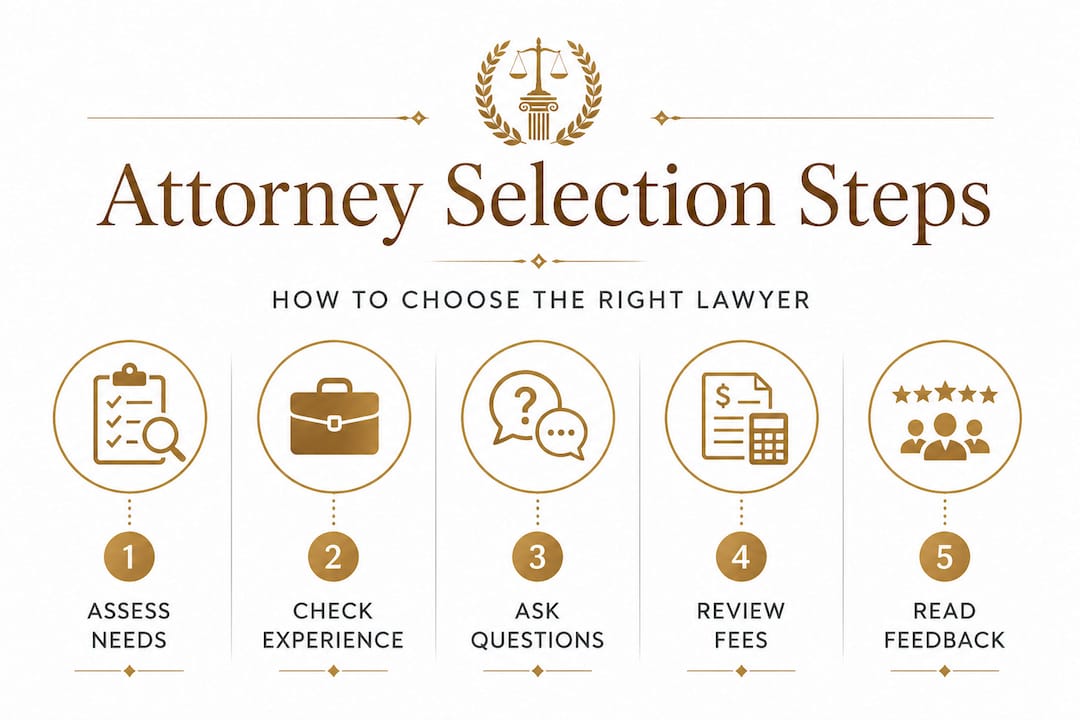
Examining a lawyer's history of maximizing compensation is vital for accident victims because insurance companies track this too. Insurers know which attorneys regularly take cases to trial and which ones routinely settle for whatever is offered. If your lawyer has a reputation for fighting hard, you're in a stronger negotiating position from day one.
How to evaluate an attorney's track record step by step:
- Visit their website and look for a results page or case history section. Specific numbers and case types are much more credible than vague language about "significant recoveries."
- Check the Pennsylvania bar association's attorney portal to confirm their license is active and that no disciplinary actions have been taken against them.
- Search for their name alongside the county where they practice to find news coverage, court records, or legal announcements related to their cases.
- Read at least ten reviews, focusing on clients with cases similar to yours. Pay attention to comments about communication, timeline accuracy, and whether expectations were met.
- Ask directly during a consultation for two or three examples of settlements or verdicts in cases that resemble yours. A qualified attorney will be ready to discuss this.
Comparison of strong vs. weak indicators when evaluating track record:
| Indicator | Strong sign | Weak sign |
|---|---|---|
| Case history | Specific settlements and verdicts listed | Vague references to "success" |
| Client reviews | Detailed accounts of process and outcome | Generic praise with no specifics |
| Bar standing | Clean record, no disciplinary history | Gaps in practice history or past issues |
| Trial experience | Cases taken to verdict when necessary | Always settles, never mentions court |
| Communication | Responds to initial inquiry promptly | Delayed or vague responses early on |
Red flags to watch for include attorneys who guarantee specific outcomes (which is ethically prohibited in Pennsylvania), those who pressure you to sign quickly, or those who seem unfamiliar with your specific type of accident when you describe it.
Pro Tip: Ask whether the attorney personally handles your case or whether it will be passed to a junior associate. Many large firms advertise high-profile names but assign cases to less experienced staff. Clarify this before you sign anything.
Key questions to ask before hiring an accident attorney
With a shortlist of attorneys who appear qualified, the consultation is your most important evaluation tool. Ask pointed questions and pay close attention to how they answer, not just what they say.
Asking the right questions helps clients identify whether a lawyer is a true specialist in personal injury and accident law, or someone who takes any case that walks through the door. The distinction matters enormously when your financial recovery is on the line.
Understanding legal terminology ensures clients are better informed and can advocate for themselves throughout the process. If an attorney explains things clearly without being condescending, that is a strong signal they will communicate well throughout your case.
Essential questions to ask during your consultation:
- What percentage of your caseload involves auto accidents or personal injury specifically?
- Have you handled cases in the county where my accident occurred?
- Who will be my primary contact, and how quickly do you respond to client questions?
- What is your honest assessment of my case, and what are its weakest points?
- How do you keep clients informed as the case progresses?
- What is your approach when an insurance company makes a low initial offer?
- Have you taken cases like mine to trial, and what were the outcomes?
"An attorney who cannot clearly explain the strengths and weaknesses of your case at the first meeting is unlikely to communicate more clearly later. Look for candor, not just confidence."
Warning signs during a consultation include vague answers about caseload, inability to name specific outcomes in similar cases, reluctance to discuss potential challenges, and a push to sign a retainer before you have time to review it. Any pressure to make an immediate commitment without time for reflection should raise concerns.
Your role in the attorney-client relationship matters too. Come prepared with any documentation you have, including accident reports, medical records, photos, and any written communication from insurance companies. Organized clients allow attorneys to assess cases more accurately and signal that you will be an engaged partner in your own recovery.
Understanding legal fees and payment structures
Attorney fees in accident cases can feel intimidating, but Pennsylvania law and standard practice provide a relatively clear framework. Understanding the structures before you sign a retainer ensures there are no surprises.
Most accident and personal injury attorneys in Pennsylvania work on a contingency fee basis. This means the attorney receives a percentage of the compensation you recover, and you pay nothing upfront. If you do not win, you owe no attorney fee. This structure aligns the attorney's incentive directly with yours, since they only get paid when you do.
Contingency fees are common in accident and personal injury law, but terms vary significantly from firm to firm. Standard contingency percentages in Pennsylvania typically range from 33% to 40%, depending on whether the case settles before litigation or proceeds to trial. Complex cases, including those involving complex case fee structures for commercial vehicle accidents, sometimes carry higher rates due to the volume of work involved.
| Fee structure | How it works | Typical use in PA accident cases |
|---|---|---|
| Contingency fee | Percentage of recovery, paid at settlement or verdict | Most personal injury and auto accident cases |
| Hourly billing | Client pays by the hour regardless of outcome | Rare in personal injury; more common in business disputes |
| Flat fee | Fixed total cost for defined services | Not typical for accident cases |
| Hybrid arrangement | Reduced hourly rate plus smaller contingency share | Occasionally used in complex commercial matters |
Beyond the attorney fee itself, ask explicitly about litigation costs. These include filing fees, expert witness fees, deposition costs, and administrative expenses. Some firms front these costs and deduct them from your final recovery; others bill as they go. Understanding when and how you will be responsible for these costs is essential before you commit.
Pro Tip: Ask for the fee agreement in writing before your first full meeting, not just at the signing stage. A reputable attorney will be transparent about all costs from the beginning and will not be offended by the request.
Using recent client feedback and online resources
After narrowing your choices through consultations and fee discussions, use external validation to confirm your instincts. Recent client feedback from verified sources offers a view into the actual day-to-day experience of working with an attorney.
Client testimonials and online feedback offer genuine insights into what it's like to work with specific accident lawyers. Reading recent reviews, ideally from the past twelve to eighteen months, gives you a more accurate picture than older feedback, since staff, practices, and caseloads change over time.
Where to look for trustworthy attorney feedback:
- Google Business profiles, which show recent reviews and allow you to filter by date
- Avvo and Martindale-Hubbell, two established legal directories that include verified client reviews and peer ratings
- The Pennsylvania Bar Association's online directory, which confirms license status and disciplinary history
- Local legal aid organizations, which sometimes maintain lists of recommended local attorneys
- Court records in your county, which are publicly accessible and can show how often an attorney appears and how their cases resolve
Spotting fake feedback requires attention to patterns. Reviews that are extremely short, posted in large batches, or contain identical phrasing are often inauthentic. Conversely, a review that describes a specific timeline, interaction, or outcome is more likely to reflect a real experience.
When assessing auto accident guidance and reading client stories, look for recurring themes rather than isolated superlatives. If multiple reviewers mention that their attorney explained each step clearly, responded quickly to phone calls, or fought back against a low insurance offer, those patterns carry weight. For broader injury cases, personal injury attorney support resources can also point you toward attorneys with documented local experience.
What most people get wrong about choosing an accident attorney
The most common mistake accident victims make is treating attorney selection like any other quick consumer decision. They pick the first name in a search result, choose whoever advertises most prominently, or simply go with the closest office.
Speed feels necessary right after an accident, but hiring early for better outcomes does not mean hiring carelessly. The two goals are compatible only if you know what to look for. Hiring an unqualified attorney quickly is far more damaging than taking an extra few days to vet your options properly.
Another common error is treating the contingency fee percentage as the most important variable. A lawyer who charges 33% and recovers $50,000 nets you less than one who charges 38% and recovers $90,000. The fee structure matters far less than the attorney's ability to accurately value your claim, negotiate assertively, and take the case to trial if necessary.
People also underestimate the value of specialization in local courts. An attorney who appears regularly in the county where your case will be filed understands the local judges, the speed of the docket, and how local juries have responded to similar claims. That familiarity is not incidental. It is often the difference between a case that resolves efficiently and one that stalls for years.
Finally, many people ignore the quality of early communication as a predictor of the relationship ahead. If an attorney's office takes three days to return your initial inquiry, or if your consultation feels rushed and generic, that experience will likely repeat throughout your case. How a firm treats potential clients tells you a great deal about how it treats existing ones.
Get personalized help for your accident claim in Pennsylvania
Recovering from an accident is stressful enough without having to figure out the legal system alone. The steps outlined above give you a clear path forward, but putting those steps into practice starts with speaking to someone who knows Pennsylvania accident law from the inside.

Attorney Sean Quinlan and the team at Pennsylvania DUI Attorney offer consultations for accident and personal injury matters across multiple Pennsylvania counties. Whether your situation involves an auto collision, a commercial vehicle accident, or another serious injury, a Pennsylvania accident attorney with hands-on local experience can review your case, explain your options, and help you understand what a realistic recovery looks like. For injury matters beyond auto accidents, personal injury legal support is available with the same commitment to personalized, results-focused representation. Reach out for a no-obligation case evaluation and get clear answers from an attorney who works specifically in Pennsylvania courts.
Frequently asked questions
What qualities should I look for in a Pennsylvania accident attorney?
Look for specialization in accident and personal injury law, successful outcomes in similar cases, and clear communication about the legal process. Understanding distinctions between auto accident and personal injury claims is crucial for protecting your legal rights, so prioritize attorneys who can clearly explain how those distinctions apply to your situation.
How are accident attorneys usually paid in Pennsylvania?
Most accident attorneys use contingency fees, meaning you only pay if you win, but confirm the percentage and any extra costs upfront. Contingency fees are common in accident law, but terms vary, so always request a written fee agreement before signing a retainer.
What's the risk of hiring a general practitioner instead of an accident specialist?
A general practitioner may lack experience with the nuances of accident cases, risking lower settlements or misunderstandings of local Pennsylvania law. Asking the right questions during a consultation quickly reveals whether an attorney truly specializes in personal injury and accident claims or simply lists it as one of many practice areas.
How can I check an attorney's reputation in Pennsylvania?
Read recent client reviews on Google and legal directories like Avvo, and verify their standing through the Pennsylvania bar association. Client testimonials and online feedback offer genuine insights into what working with specific accident lawyers is actually like, making them one of the most practical verification tools available.
Recommended
- Auto Accidents in Pennsylvania: Know Your Rights and How to Protect Them — Attorney Sean Quinlan
- DUI Defense in Pennsylvania: Why You Need an Experienced Attorney — Attorney Sean Quinlan
- Personal Injury Claims: How to Pursue Justice and Compensation — Attorney Sean Quinlan
- What to Do After an Auto Accident: Protecting Your Rights — Attorney Sean Quinlan