

If you've been injured in a car accident, knowing how to prepare for an accident lawsuit can be the difference between fair compensation and walking away with far less than you deserve. Personal injury litigation, which is the formal legal term for what most people call an "accident lawsuit," involves strict deadlines, procedural rules, and evidence standards that can catch unprepared plaintiffs off guard. This guide walks you through every critical step, from the hours after impact to settlement negotiations or trial, so you can protect your claim and pursue the recovery you are owed.
Table of Contents
- Key takeaways
- How to prepare for an accident lawsuit: gathering evidence first
- Starting the accident lawsuit process formally
- Working with your attorney through discovery and negotiation
- Common mistakes that can damage your claim
- What to expect from the lawsuit timeline
- My perspective on accident case preparation
- Ready to build your case? Talk to Sean Quinlan
- FAQ
Key takeaways
| Point | Details |
|---|---|
| Preserve evidence immediately | Document the scene, gather police reports, and seek medical care within hours of the accident. |
| Calendar your deadline now | Statutes of limitations typically run 2 to 4 years and missing them ends your case permanently. |
| Attorney communication wins cases | Organized, prompt document sharing with your lawyer directly improves settlement outcomes. |
| Common mistakes are avoidable | Admitting fault, skipping treatment, and posting on social media are the top ways plaintiffs damage their own claims. |
| Most cases settle before trial | Understanding the negotiation and mediation phases prepares you to make smart decisions on settlement offers. |
How to prepare for an accident lawsuit: gathering evidence first
The foundation of any personal injury case is evidence, and the clock starts the moment the crash happens. Early evidence preservation immediately after the crash is one of the most reliable predictors of case strength. What you collect in the first 24 to 72 hours is often irreplaceable.
Here is a prioritized checklist of documents and proof you need to start building your case:
- Police report. Request the official report number at the scene and obtain the full written report as soon as it is available. This document establishes the responding officer's observations and any citations issued.
- Medical records and bills. Seek medical evaluation the same day, even if you feel fine. Adrenaline masks pain, and delayed treatment creates gaps in your records that insurers exploit. Keep every bill, prescription receipt, and treatment summary.
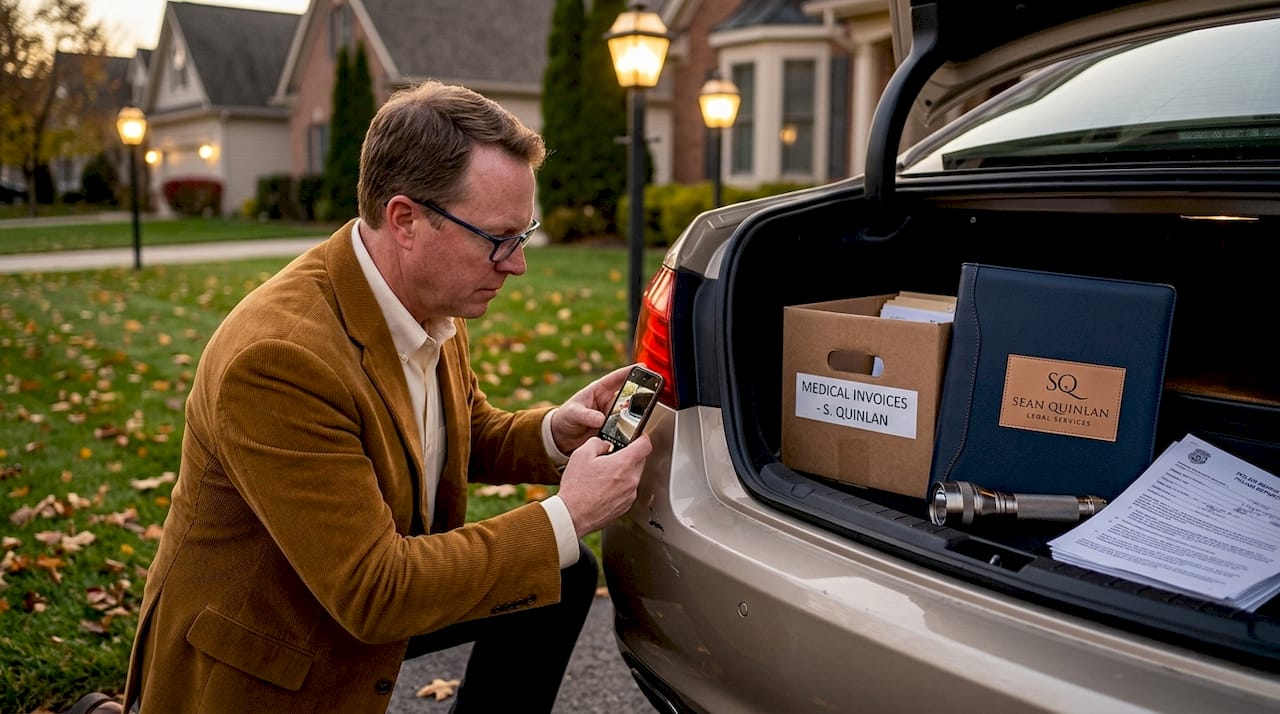
- Photographs and video. Capture all vehicle damage, road conditions, skid marks, traffic signals, and any visible injuries from multiple angles. Video walk-arounds of both vehicles are especially persuasive.
- Witness information. Get the full name, phone number, and email of every bystander who saw the accident. Written statements taken on the spot carry more weight than recollections gathered weeks later.
- Personal injury journal. Start a written log that same day. Record your pain levels, limitations on daily activity, emotional distress, and any missed work. Courts and insurers pay attention to this kind of documented impact.
An organized evidence dossier that includes police reports, medical records, bills, witness statements, and repair estimates gives your attorney a clear foundation to build your case efficiently.
Pro Tip: Never give a recorded statement to the opposing driver's insurance company before speaking with an attorney. Avoid recorded statements before lawyer review because insurers are trained to use your own words against your claim.
Starting the accident lawsuit process formally
Once your evidence is assembled and you have retained an attorney, the next phase involves formal legal steps. Understanding these accident lawsuit steps removes a lot of the anxiety that comes from not knowing what happens next.
- Hire a personal injury attorney. Before filing anything, get legal counsel. An attorney will evaluate liability, calculate damages, and advise whether filing suit makes sense given the facts.
- File the civil complaint. Your attorney drafts and files a complaint with the appropriate court. This document identifies the parties, states the facts of the accident, and specifies the damages you are seeking.
- Serve the defendant. After filing, the defendant must be formally notified. Service of process within 90 days is required under Federal Rule 4(m), and failure to serve within that window can result in dismissal without prejudice.
- Await the answer. The defendant has a set period, typically 20 to 30 days, to file a formal response admitting or denying each allegation.
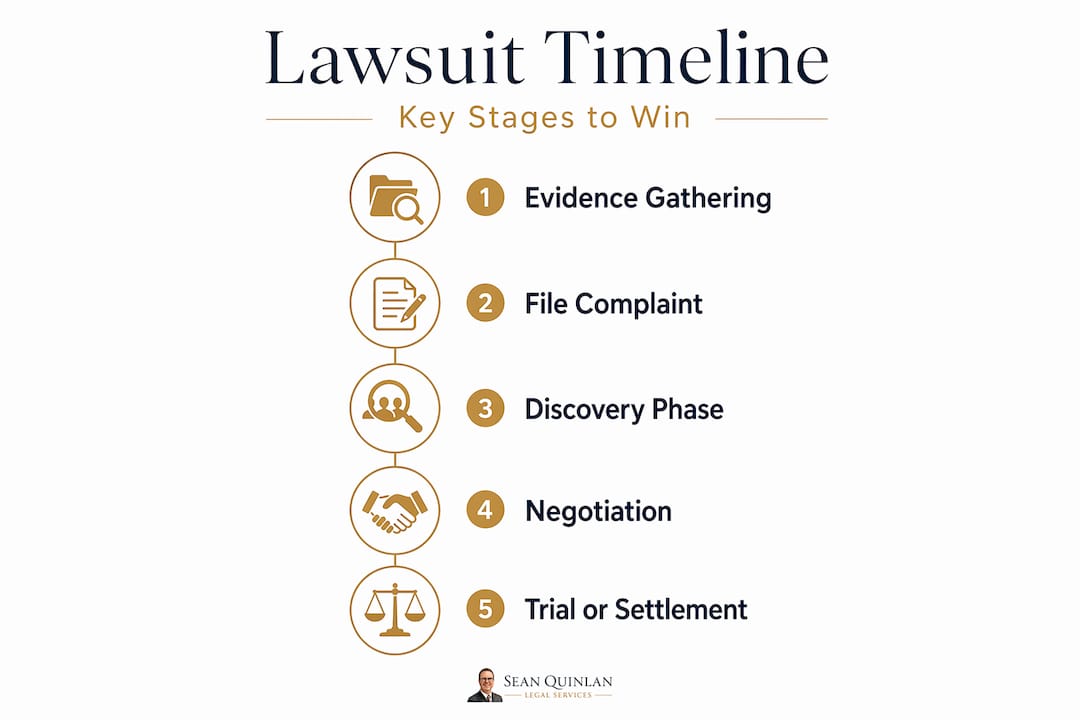
- Enter the discovery phase. Both sides exchange evidence, take depositions, and answer written interrogatories to build their respective cases.
One procedural point most people overlook is the statute of limitations. Deadlines are typically 2 to 4 years from the accident date, fixed by state law. In Pennsylvania, the standard deadline for personal injury claims is two years. Missing this date forfeits your right to sue permanently, regardless of how strong your evidence is.
| Stage | What happens | Typical timeframe |
|---|---|---|
| Filing complaint | Attorney submits formal lawsuit to court | Within statute of limitations |
| Service of process | Defendant is officially notified | Within 90 days of filing |
| Discovery | Evidence exchange, depositions, interrogatories | 3 to 12 months |
| Mediation or negotiation | Settlement discussions with all parties | Varies |
| Trial (if needed) | Case argued before judge or jury | 1 to 3 weeks |
For a detailed walkthrough of what to do at each stage, the Pennsylvania accident steps guide from Pennsylvaniadui covers state-specific requirements clearly.
Working with your attorney through discovery and negotiation
This phase is where preparation meets strategy. The discovery phase involves depositions, interrogatories, and document exchange that directly shape settlement values and trial readiness. Your job is to make your attorney's work as efficient as possible.
Here is how to be the kind of client who helps win cases:
- Respond promptly. When your attorney requests documents or information, treat it as time-sensitive. Delays in discovery can trigger court sanctions or weaken your position.
- Organize your records. Create a clearly labeled folder with every document: medical bills sorted by date, correspondence with insurers, photos numbered by location, and wage loss documentation from your employer.
- Prepare seriously for depositions. A deposition is sworn testimony taken outside of court. Your attorney will prepare you, but you must know your own timeline of events, treatment history, and the impact of injuries on your life.
- Understand the demand letter process. A well-prepared demand letter outlines your injuries, liability argument, and compensation expectations. This phase often determines whether the case settles before trial. A poorly prepared demand weakens your negotiating position significantly.
- Set realistic settlement expectations. Your attorney will advise on a fair value range. Understand that insurers almost always respond with a lower counter-offer. This is standard practice, not a final answer.
Pro Tip: Keep a running list of questions for your attorney between meetings rather than emailing for every thought. This respects their time and gives you more productive, focused conversations that move your case forward.
Common mistakes that can damage your claim
Even strong cases get undermined by avoidable errors. The most common mistakes include admitting fault, delaying medical treatment, accepting first settlement offers, and posting about the accident on social media. Each of these can severely weaken a claim or cause outright denial.
Protect yourself by being aware of the following:
- Never admit fault at the scene or afterward. Saying "I'm sorry" or speculating about what caused the crash can be used as an admission of liability.
- Do not accept a quick settlement. Early offers from insurers are almost always below the full value of your claim. Once you sign a release, you cannot pursue additional compensation, even if your injuries worsen.
- Maintain consistent medical treatment. Gaps in treatment suggest to insurers and juries that your injuries are not as serious as claimed. Follow every recommended appointment and therapy session.
- Stay off social media. Defense attorneys and insurance adjusters routinely search plaintiff profiles for photos or posts that contradict claimed injuries. A single photo at a family gathering can cost you significant compensation.
- Do not miss filing deadlines. Set calendar reminders for the statute of limitations date the week you retain counsel.
The single most damaging thing a plaintiff can do is talk too much, too early. Protect your claim with the same discipline you would protect any serious legal right.
For additional guidance on protecting yourself legally after an accident, the post-accident rights guide from Pennsylvaniadui covers Pennsylvania-specific protections in detail.
What to expect from the lawsuit timeline
One of the biggest sources of stress in preparing for a lawsuit is not knowing how long the process takes. Most car accident cases settle through negotiation and mediation rather than going to trial, but that still takes time.
The timeline below reflects typical ranges. Complex cases involving severe injuries, disputed liability, or commercial vehicles take longer.
| Phase | Description | Estimated duration |
|---|---|---|
| Immediate aftermath | Evidence collection, medical treatment | Days to weeks |
| Pre-suit investigation | Attorney review, demand preparation | 1 to 6 months |
| Filing and service | Complaint filed, defendant served | Up to 90 days after filing |
| Discovery | Depositions, document exchange | 3 to 12 months |
| Mediation or settlement talks | Structured negotiation with parties | 1 to 3 months |
| Trial (if no settlement reached) | Full courtroom proceedings | 1 to 3 weeks |
Several factors can accelerate or extend this timeline. Cases with clear liability and documented injuries settle faster. Disputes over fault, catastrophic injuries requiring ongoing treatment, or uncooperative defendants all add time. The discovery phase, in particular, can stretch considerably if either party contests document requests or schedules depositions slowly.
Understanding settlement offers also requires patience. A final payment after settlement can take 30 to 60 days after a release is signed, depending on the insurer's processing timeline and any medical liens that must be resolved first.
My perspective on accident case preparation
I've handled enough of these cases to say this plainly: the outcome is almost always shaped in the first few days after the accident, not in the courtroom. By the time a case reaches trial, the evidence either supports your claim or it doesn't. Waiting to "see how things develop" is the most common mistake I observe from plaintiffs who end up undercompensated.
What I've learned is that people underestimate how adversarial the insurance process is. Insurers are not neutral parties. Their adjusters are trained to minimize payouts, and they are very good at it. A photograph you did not take, a statement you made without thinking, or a week of skipped physical therapy can become the cornerstone of a defense argument.
My advice is to treat your case like a business file from day one. Document everything, communicate with your attorney promptly, and resist the pressure to settle fast just to make the stress stop. Patience, combined with disciplined preparation, is what separates plaintiffs who recover fair value from those who accept whatever is offered first.
The attorneys who achieve the best results for clients are the ones who receive organized, complete information. You are a critical part of that equation. The more prepared you are, the better they can advocate for you.
— Sean
Ready to build your case? Talk to Sean Quinlan
If you are dealing with injuries from an auto accident in Pennsylvania and you need guidance on how to move forward, Pennsylvaniadui is ready to help. Attorney Sean Quinlan has helped accident victims across multiple Pennsylvania counties navigate every phase of personal injury litigation, from preserving evidence to negotiating fair settlements.

Whether you are at the very beginning of the process or already in negotiations, getting experienced legal counsel makes a measurable difference. Pennsylvaniadui offers a free case evaluation with no obligation, so you can understand your options before committing to a path. Visit the auto accident legal help page to get started, or reach out directly to schedule your consultation. For broader injury claims, the personal injury services page outlines how Sean Quinlan can support your case from first filing to final resolution.
FAQ
What documents are needed to start an accident lawsuit?
You will need the police report, all medical records and bills, photographs of the accident scene and injuries, witness contact information, and any documentation of lost wages. An organized case file covering these materials gives your attorney the foundation to file an effective complaint.
How long do I have to file an accident lawsuit in Pennsylvania?
Pennsylvania law gives injured parties two years from the accident date to file a personal injury lawsuit. Missing this deadline permanently bars you from pursuing compensation, regardless of the merits of your case.
Will my accident case go to trial?
Most cases do not reach trial. The majority of personal injury claims resolve through settlement negotiations or mediation. However, filing a lawsuit strengthens your negotiating position and preserves your right to trial if a fair offer is not made.
What is the biggest mistake accident victims make when preparing for court?
Accepting a fast settlement before understanding the full scope of your injuries is one of the most costly errors. Signing a release before maximum medical improvement is reached eliminates any future claim, even if your condition worsens significantly afterward.
How does the discovery phase affect my accident claim?
Discovery is the phase where both sides exchange evidence, conduct depositions, and submit written questions called interrogatories. Strong preparation during this phase directly affects settlement value. Gaps in your documentation or inconsistencies in your testimony can reduce the strength of your position considerably.