
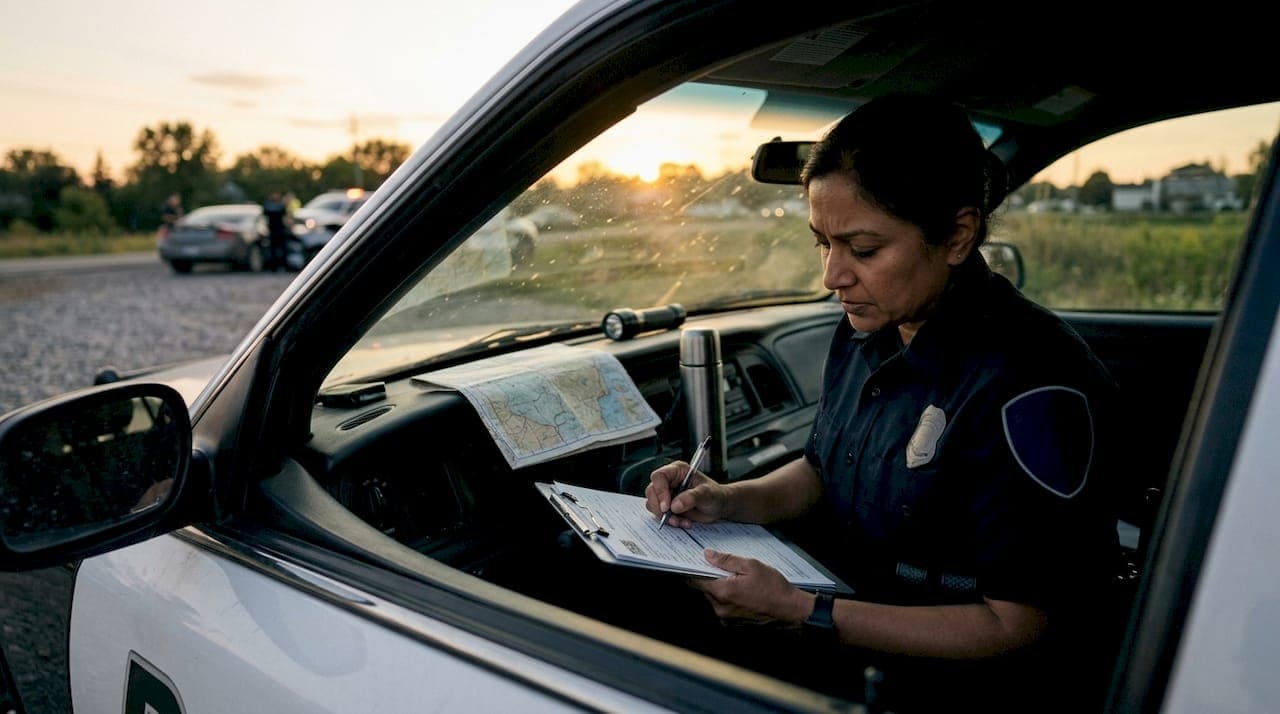
An accident report is the official police document that captures factual details of a vehicle collision and is vital for insurance claims and legal proceedings. Formally called a crash report or police crash report, this record contains officer observations, witness contact information, road conditions, and a diagram of the scene. Knowing why request an accident report matters is not just procedural knowledge. It is the difference between a supported claim and a denied one. In Central Pennsylvania, including Cumberland County, Dauphin County, and York County, obtaining this document promptly protects your rights and positions you for a stronger recovery.
Why request an accident report: legal and insurance reasons
Insurance companies treat police accident reports as a crucial piece of evidence for fault determination and claims. That means the adjuster reviewing your case is already looking for this document before they process a single dollar of your claim.
The benefits of an accident report extend across several critical areas:
- Fault determination. The report provides a neutral, third-party narrative of the crash. This reduces disputes between drivers and speeds up the adjuster's review.
- Injury and damage documentation. Officer notes on visible injuries, vehicle positions, and road conditions create an early record that supports medical and property claims.
- Witness identification. The report lists names and contact details for any witnesses on scene. These individuals can become key to your case if liability is contested.
- Pain and suffering claims. Documented details about crash severity directly influence compensation for non-economic damages like pain and suffering.
- Legal proceedings. Attorneys use the report as an investigative starting point, identifying legal issues and building a case strategy around the documented facts.
Without an accident report, insurance claims become a word-against-word dispute with longer investigations and more frequent denials. That outcome is avoidable when you act quickly after a crash.
Pro Tip: Even if the other driver admits fault at the scene, always request the official police crash report. Verbal admissions are not preserved in any official record and can be walked back later.

If you are unsure about your obligations after a collision, the legal facts about reporting an auto accident in Pennsylvania are worth reviewing before you speak with an adjuster.
How to obtain an accident report in central pennsylvania
The request accident report process in Pennsylvania follows a clear path, but local variations in Cumberland, Dauphin, and York Counties mean you need to know your options.
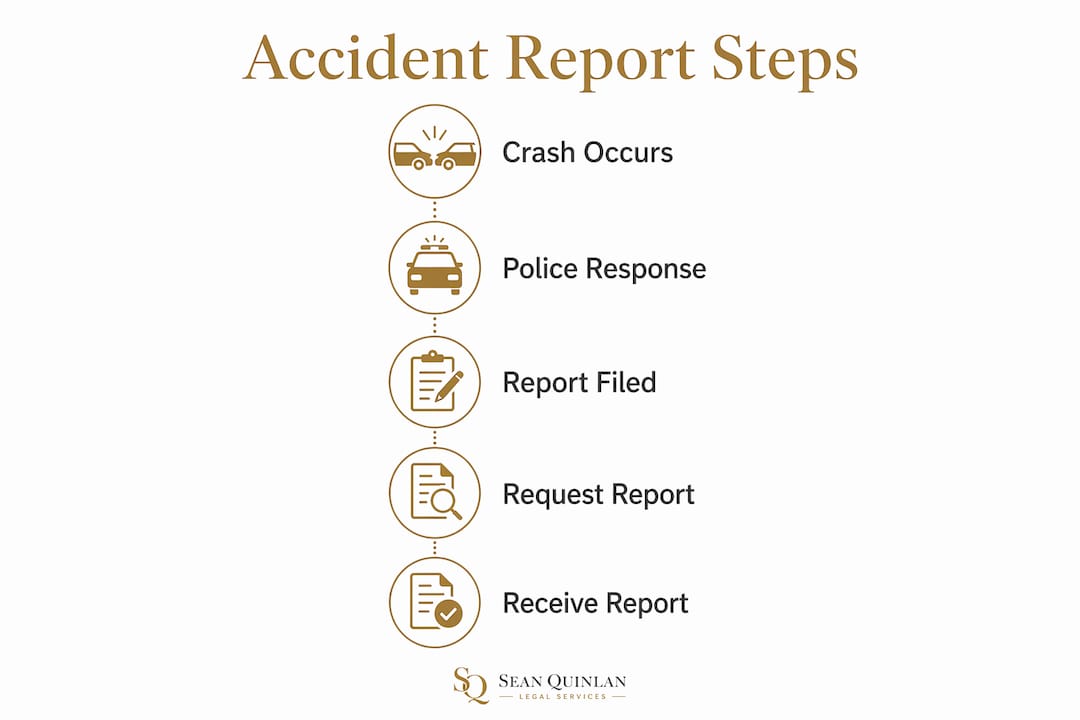
Most accident police reports are available online 5–14 days after the crash, with costs ranging from $5 to $25. That window matters because the sooner you have the report, the sooner your attorney or insurer can act on it.
Here are the steps to request your accident report in Central Pennsylvania:
- Gather your crash details. You typically need the crash date, location, case number, and sometimes valid ID or a notarized letter to process the request. Write these down before you contact any agency.
- Choose your request method. Pennsylvania offers three main options. The Pennsylvania State Police provides online access through their crash report portal. Local municipal police departments in Harrisburg, Camp Hill, and surrounding areas handle requests directly at their precincts. Mail-in requests use the PennDOT form MV-198C for reports on file with the state.
- Submit your request. Online portals provide the fastest access, typically within the 5–14 day window. In-person requests at the Harrisburg or Camp Hill precinct can sometimes be fulfilled faster if the report is already filed. Mail-in requests take longer and should be used only when other options are unavailable.
- Pay the applicable fee. Online portals often charge convenience fees for faster access. FOIA or public records requests are often cheaper but take 5–21 days to process. If cost is a concern, FOIA is a legitimate path.
- Review the report upon receipt. Check every field for accuracy before submitting it to your insurer or attorney.
What if police did not respond to your crash?
Pennsylvania law does not require police to respond to every minor collision. If no officer came to the scene, you can file a self-report with PennDOT using form AA-600. This document still creates an official record, though it carries less evidentiary weight than a police-generated report. In this situation, gathering your own evidence at the scene, including photos, witness contacts, and a written account, becomes especially important.
| Request Method | Typical Timeframe | Approximate Cost |
|---|---|---|
| Online portal (PA State Police) | 5–14 days | $5–$25 |
| In-person (local precinct) | Same day to 5 days | $5–$15 |
| Mail-in (MV-198C / PennDOT) | 2–4 weeks | $5–$10 |
| FOIA / public records request | 5–21 days | Free to reduced fee |
Pro Tip: If your crash occurred on a state highway in Cumberland or Dauphin County, the Pennsylvania State Police likely filed the report. For crashes on local roads in Harrisburg or Camp Hill, contact the municipal police department directly to avoid delays.
Are accident reports final proof of fault?
Accident reports are not legal fault findings. Officers rely on secondhand information gathered after the fact and must be considered starting points rather than final evidence. This distinction matters enormously when you are building a claim or preparing for litigation.
Here is what the report can and cannot do for you:
- What it does: Creates an official, timestamped record of the crash. Documents officer observations, road conditions, and witness statements. Gives attorneys and adjusters a common reference point.
- What it does not do: Establish legal liability. Serve as admissible evidence in court in all jurisdictions. Override contradictory physical evidence or medical records.
- Where errors occur: Officers may misidentify the at-fault driver based on one party's account. Diagram measurements can be approximate. Witness statements recorded in the report may conflict with later sworn testimony.
"Police accident reports are not legal findings of fault but are frequently treated as proxies by insurance adjusters, who recognize their inherent limitations." — LegalClarity.org
An unfavorable report does not end your claim or lawsuit. Attorneys in Harrisburg and Camp Hill regularly challenge report contents using medical records, surveillance footage, accident reconstruction experts, and independent witness statements. The report is the starting line, not the finish line.
Insurance companies understand this too. Adjusters use reports strategically, leaning on favorable details while downplaying errors that benefit the claimant. Knowing this dynamic helps you approach the process with realistic expectations and a clear need for qualified legal guidance.
What to do with the accident report once you have it
Receiving the report is not the end of the process. How you use it determines how much it helps your case.
- Review it immediately for errors. Check the names, addresses, vehicle descriptions, and the officer's narrative. Errors in any of these fields can create problems with your insurer or in court.
- Dispute inaccuracies in writing. If the report contains factual errors, contact the reporting agency to request a correction or file a supplemental statement. Document every communication.
- Provide it to your insurance adjuster promptly. Accident reports contain detailed neutral facts such as crash time, location, witness statements, and officer observations. Getting this to your adjuster quickly reduces back-and-forth and speeds up your claim.
- Share it with your attorney. Accident reports act as roadmaps for attorneys, identifying witnesses and legal issues rather than providing final rulings on fault. Your attorney needs this document to begin building your case strategy.
- Contact listed witnesses. The report includes witness contact information. Reach out to these individuals early, before memories fade or contact details change.
- Keep a copy in a secure location. You may need this document months or years later for supplemental claims, litigation, or uninsured motorist proceedings.
For a complete checklist of steps after a Pennsylvania collision, the auto accident checklist for Pennsylvania drivers covers documentation, reporting, and legal steps in detail.
Pro Tip: Reports created soon after a crash provide more reliable evidence since many accident scene details degrade rapidly over time. Request your report the moment it becomes available, not when it is convenient.
Key takeaways
Requesting an accident report immediately after a collision is the single most effective step you can take to protect your insurance claim and legal rights in Central Pennsylvania.
| Point | Details |
|---|---|
| Request the report promptly | Reports become available 5–14 days post-crash; early access preserves time-sensitive evidence. |
| Reports support, not decide, fault | Police crash reports are starting points for claims, not legal fault determinations. |
| Know your local request options | In Cumberland, Dauphin, and York Counties, use online portals, in-person precincts, or MV-198C by mail. |
| Review for errors immediately | Inaccuracies in the report can delay or damage your claim if left uncorrected. |
| Share with attorney and insurer | Attorneys use reports as investigative roadmaps; adjusters use them for fault and damages review. |
What experience has taught me about accident reports in pennsylvania
After working with accident victims across Harrisburg, Camp Hill, and the surrounding counties, one pattern stands out clearly. The clients who face the most difficulty are not always those with the worst injuries. They are the ones who waited too long to request their report or assumed the insurance company would handle everything.
Timing is critical as evidence degrades quickly. Skid marks disappear. Surveillance footage gets overwritten. Witnesses move or forget details. The police crash report is often the only document that captures the scene as it was in the hours after impact. When that report is delayed or missing, the entire claim becomes harder to support.
I have also seen clients receive reports with significant errors, including the wrong at-fault driver listed, and assume the report was final. It is not. A skilled attorney can challenge those findings with physical evidence and expert testimony. But that process takes time, and it starts with having the report in hand.
My advice is simple. Request the report the moment it is available. Read every line. If something is wrong, address it immediately with the reporting agency. Then bring the report to an attorney before you give a recorded statement to any insurance company. In Central Pennsylvania, where local police departments and PennDOT each have their own procedures, knowing the right channel to use can save you weeks of delay. That time matters when you are trying to recover.
— Atry. Sean Quinlan
Get legal help with your accident report and claim
Obtaining the report is only the first step. Understanding what it means for your specific situation requires legal experience.

Pennsylvania DUI Attorney, led by Sean P. Quinlan, provides focused legal representation for auto accident victims across Cumberland County, Dauphin County, York County, and the greater Harrisburg and Camp Hill areas. If your report contains errors, if the other driver's insurer is using the report against you, or if you are unsure how to proceed, qualified legal counsel can protect your position. Visit the auto accident legal services page to learn how Pennsylvania DUI Attorney can help you move forward with confidence. You can also review your broader rights as a Pennsylvania driver at the know your rights guide for accident victims.
FAQ
What is an accident report used for after a crash?
An accident report documents crash facts, officer observations, and witness information. Insurance adjusters and attorneys use it to evaluate fault, process claims, and build legal strategy.
Who can request an accident report in pennsylvania?
Any party involved in the crash, their attorney, or their insurance company can request the report. Valid identification or a notarized letter may be required depending on the agency.
How long does it take to get an accident report in pennsylvania?
Most reports are available online within 5–14 days after the crash. FOIA requests may take 5–21 days but often cost less or nothing.
What if the accident report contains errors?
Contact the reporting agency in writing to request a correction or file a supplemental statement. An attorney can also help challenge inaccurate findings using physical evidence and witness testimony.
Does an accident report prove who was at fault?
No. Accident reports are not legal fault findings and are not always admissible as evidence in court. They serve as an investigative starting point, not a final determination of liability.