

Getting hurt in a car accident turns your world upside down fast. Medical bills pile up, your car is in the shop, you're missing work, and suddenly you're on the phone with an insurance adjuster who seems to know every trick in the book. Pennsylvania's auto injury laws add another layer of complexity that most people simply aren't prepared for. This guide cuts through the confusion and walks you through everything you need to know, from the legal framework that governs your claim to the exact steps you should take in the first hours after a crash.
Table of Contents
- Understanding Pennsylvania auto injury laws
- Immediate steps after an auto accident
- Navigating the claims process
- When to seek legal help and what to expect
- Beyond the basics: Real-world insights for Pennsylvania accident victims
- Connect with local experts for your auto injury case
- Frequently asked questions
Key Takeaways
| Point | Details |
|---|---|
| Act fast after accidents | Prompt action preserves evidence and protects your right to compensation. |
| Know your coverage | Understanding Pennsylvania’s no-fault and tort laws is key for optimizing your claim. |
| Document everything | Careful records of injuries and the accident scene make claims stronger and easier to prove. |
| Consult legal experts | Professional support often increases your settlement and simplifies the legal process. |
Understanding Pennsylvania auto injury laws
Pennsylvania operates under what's called a "choice no-fault" system, which makes it different from most states and a source of real confusion for accident victims. When you buy auto insurance in Pennsylvania, you make a critical choice that determines how you can seek compensation if you're ever injured. You either select full tort or limited tort coverage, and that single decision shapes nearly every aspect of your legal rights after a crash.
Under limited tort, you agree to accept lower insurance premiums in exchange for giving up some rights. Specifically, you can still recover out-of-pocket economic losses like medical bills and lost wages, but you generally cannot seek compensation for pain and suffering unless your injuries meet a legal threshold for "serious injury." Under full tort, you retain the unrestricted right to sue for all damages, including pain and suffering, regardless of injury severity. Understanding your policy is step one in knowing your rights after an accident.
Here's a quick comparison to make this concrete:
| Feature | Full Tort | Limited Tort |
|---|---|---|
| Monthly premium | Higher | Lower |
| Sue for pain and suffering | Yes, always | Only with serious injury |
| Economic damages (bills, wages) | Yes | Yes |
| Right to sue another driver | Unrestricted | Restricted |
| Best for | Those wanting full protection | Budget-conscious drivers |
Beyond tort options, you need to understand a few key legal terms. Liability means legal responsibility. Negligence means someone failed to act with reasonable care. Damages refers to the total losses you suffered, both economic (medical bills, lost wages) and non-economic (pain, emotional distress). Getting familiar with essential injury terms before you file a claim will help you communicate clearly with your attorney and understand every document you sign.
The following requirements must be met for a successful compensation claim in Pennsylvania:
- The other driver must have been negligent or at fault
- Your injuries must be documented by medical professionals
- You must file within the legal deadline
- Your own insurance must be active and in good standing
- You must report the accident to police and your insurer promptly
Statute of limitations warning: Pennsylvania law generally gives you two years from the date of the accident to file a personal injury lawsuit. Missing this deadline almost certainly ends your ability to recover any compensation, regardless of how strong your case is. Pennsylvania law affects compensation eligibility and insurance processes in ways most drivers never anticipate until it's too late.
Immediate steps after an auto accident
The legal foundation matters, but what you do in the minutes and hours right after a crash matters just as much. Many valid claims get denied or reduced because victims don't take the right steps early on. Acting quickly after a crash is critical for protecting your rights and preserving the evidence that supports your case.
Here is the order of actions to follow:
- Check for injuries and call 911. Your safety and the safety of others comes first. Never skip calling police, even in minor accidents. A police report creates an official record that is often essential for insurance claims.
- Move to safety if possible. If cars can be moved out of traffic without risk of further injury, do so. Turn on your hazard lights.
- Exchange information with the other driver. Get their name, address, license number, license plate, and insurance details. Be factual, not accusatory.
- Document the scene thoroughly. Take photos of all vehicles, damage, road conditions, traffic signs, and any visible injuries. Video works even better. Photograph from multiple angles.
- Gather witness information. Names and phone numbers of bystanders can be invaluable later.
- Seek medical attention immediately. Even if you feel fine, get checked out. Some injuries like whiplash and internal trauma do not show symptoms for days.
- Notify your insurance company. Report the accident promptly. Delay can be used against you during the claims process.
- Follow up with your doctor. Keep all appointments and follow treatment plans. Gaps in treatment give insurers a reason to minimize your injuries.
Pro Tip: The single most valuable piece of evidence in many auto injury claims is a detailed, time-stamped photo taken at the scene. The weather, lighting, skid marks, and vehicle positions tell a story that words alone cannot match. If you have a passenger, ask them to focus on taking photos while you handle the immediate logistics.
Studies show that a significant percentage of auto injury claims are weakened or outright denied because of missing or incomplete evidence from the accident scene. Insurers specifically look for gaps in documentation as a reason to reduce payouts. The recovery guide for PA accidents outlines exactly what evidence carries the most weight and how to preserve it correctly.
Navigating the claims process
Once you've handled the immediate aftermath, the next challenge is turning your evidence and injuries into actual compensation. Properly documenting your claim helps maximize your recovery, and knowing what the process looks like from start to finish keeps you from making costly mistakes.

Here's what the typical claims timeline looks like in Pennsylvania:
| Phase | Timeframe | Key Documents Needed |
|---|---|---|
| Initial report to insurer | Within 24-72 hours | Police report, photos, witness info |
| Medical evaluation | As soon as possible | Doctor's notes, diagnosis, treatment plan |
| Claim investigation | 2-6 weeks | All medical records, wage loss proof |
| Settlement negotiation | 1-6 months | Demand letter, documented damages |
| Lawsuit filing (if needed) | Before 2-year deadline | All of the above plus legal filings |
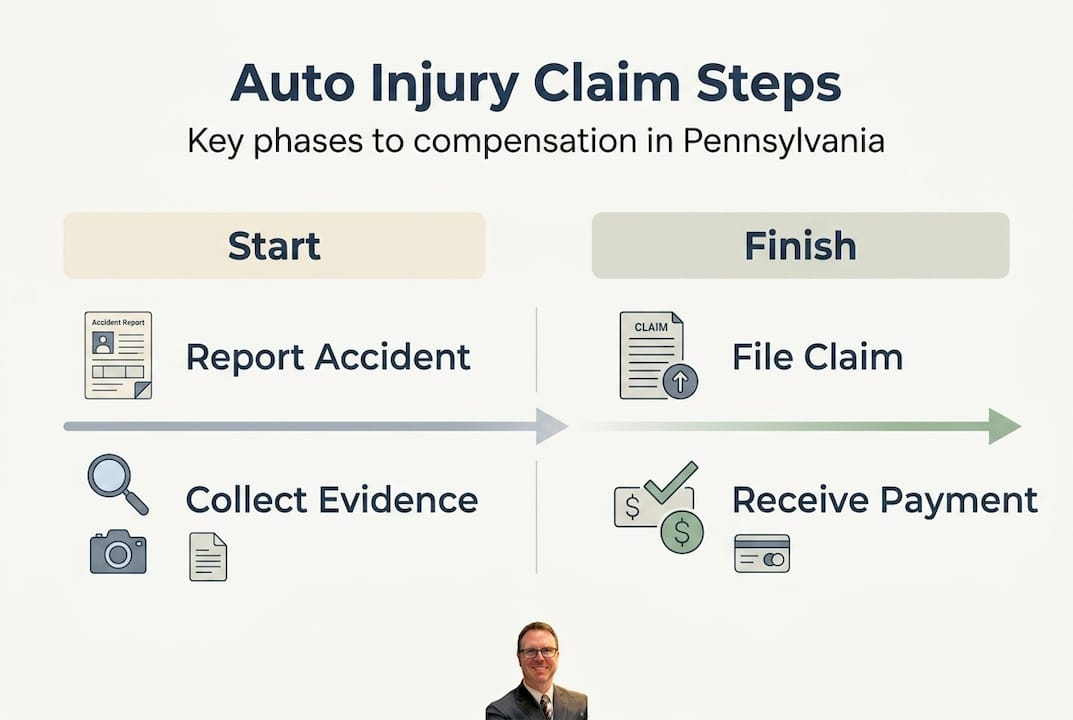
The process starts with notifying both your insurance company and the at-fault driver's insurer. Your own insurer handles your immediate medical costs under your personal injury protection (PIP) coverage. The at-fault driver's insurer is responsible for your broader damages. You or your attorney will eventually send a demand letter, which is a formal document outlining your injuries, treatment, losses, and the amount you're seeking. This opens negotiation.
The most common mistakes people make during this process include:
- Giving a recorded statement to the other driver's insurance company without legal advice first
- Accepting the first settlement offer before knowing the full extent of injuries
- Signing any medical release forms that give insurers blanket access to your records
- Failing to document all out-of-pocket costs, including transportation to appointments
- Waiting too long to consult an attorney, missing critical deadlines or strategic opportunities
Pro Tip: When an insurance adjuster contacts you, be polite but say as little as possible. Their job is to settle your claim for as little as they can. You are not required to give a recorded statement to the other driver's insurer. Direct any substantive questions to your attorney or tell the adjuster you are represented and they should call your counsel. This single step can prevent you from accidentally saying something that reduces your payout.
The compensation claim guide details exactly what language to use in demand letters, what medical documentation carries the most weight, and how to push back when an insurer undervalues your claim.
When to seek legal help and what to expect
Not every accident requires an attorney, but many people wait too long to get help and end up accepting settlements far below what they deserve. There are clear signs that tell you it's time to bring in professional legal support.
You should seriously consider contacting a personal injury attorney if:
- Your injuries are serious, long-term, or require surgery or ongoing treatment
- The insurance company disputes liability or denies your claim outright
- You missed significant time at work and face wage loss that's hard to quantify
- Multiple vehicles or parties were involved, complicating fault determination
- The other driver was uninsured or underinsured
- You're being pressured to settle quickly before you know your full damages
- You received a settlement offer that feels low but you're not sure how to evaluate it
A skilled personal injury attorney does a lot more than file paperwork. They investigate the accident independently, gather expert opinions, calculate the true value of your damages including future costs, negotiate aggressively with insurers, and prepare for trial if a fair settlement can't be reached. They also know how to handle insurance company tactics that are designed to minimize payouts. Understanding your personal injury rights in PA helps you recognize when those rights are being violated.
Typical outcomes in Pennsylvania auto injury cases vary widely depending on injury severity, fault, and available insurance limits:
- Minor injury claims (soft tissue, short treatment): Settlements often range from a few thousand to $15,000
- Moderate injury claims (fractures, extended treatment): Settlements often range from $15,000 to $100,000
- Serious or permanent injury claims (surgery, disability, long-term care): Settlements can exceed $100,000 and may go to trial
- Wrongful death claims: These follow separate rules and often involve much larger awards
"Having an attorney in your corner doesn't just change the outcome of your case, it changes the entire dynamic of how insurers treat your claim. Represented claimants receive, on average, significantly higher settlements than those who go it alone." Legal representation often leads to higher compensation and a smoother path through the recovery process.
Most personal injury attorneys in Pennsylvania work on a contingency fee basis, meaning you pay nothing upfront. The attorney takes a percentage of your settlement or award only if you win. This removes the financial barrier to getting quality legal help, which means there's really no good reason to face this process alone.
Beyond the basics: Real-world insights for Pennsylvania accident victims
Here's something most articles won't tell you: the cases that go wrong almost never fail because of bad evidence or unclear liability. They fail because of what happens in the days and weeks after the accident, when victims are trying to recover and not thinking about legal strategy.
We've seen it happen repeatedly. Someone walks away from a crash feeling shaken but okay. They skip the emergency room because they don't want to make a big deal of things. Three weeks later, a disc injury shows up on an MRI, but now there's a gap in treatment that the insurer will use to argue the injury wasn't caused by the accident. That gap, not the injury itself, becomes the central fight in the claim.
The psychological side of accident recovery is also underestimated. Accident-related anxiety, PTSD, and depression are real, documented conditions that count as damages in Pennsylvania, but only if they're diagnosed and treated by a professional. Many accident victims suffer in silence because they don't realize their emotional injuries have legal value. Document everything, including mental health treatment.
The contrarian reality about waiting to contact an attorney is this: waiting almost always costs you money. Protecting yourself after an accident starts on day one, not day thirty. Evidence disappears. Witnesses forget details. Surveillance footage gets overwritten within days. And if you've already given recorded statements or signed releases, an attorney has far less to work with.
Our perspective, built from seeing many Pennsylvania cases play out, is simple. Treat your accident like a business transaction from the start, even while you're healing emotionally. Keep records, stay off social media about the accident, follow every medical recommendation, and talk to an attorney before you talk to the other driver's insurer. That mindset, more than anything else, separates the cases with fair outcomes from the ones that don't.
Connect with local experts for your auto injury case
Navigating a Pennsylvania auto injury claim on your own is like walking into court without knowing the rules of the game. You might get somewhere, but the odds are stacked against you.

Attorney Sean Quinlan and his team have handled auto injury cases across multiple Pennsylvania counties and know exactly how local insurers and courts operate. Whether you're dealing with a disputed liability claim, a denied PIP (personal injury protection) application, or a serious injury that requires long-term compensation, specialized legal help for auto accidents is available right now. The team also provides personal injury legal support for victims who need guidance on building the strongest possible case. Reach out to Attorney Sean Quinlan's office for a consultation and find out what your claim is really worth before you sign anything.
Frequently asked questions
How long do I have to file an auto injury claim in Pennsylvania?
You generally have two years from the accident date to file a personal injury claim, but some exceptions apply for minors or cases involving government vehicles. Pennsylvania law affects compensation eligibility and missing this deadline almost always ends your legal options entirely.
What is the difference between full tort and limited tort?
Full tort allows you to seek compensation for pain and suffering without restriction, while limited tort limits you to out-of-pocket losses unless your injuries qualify as "serious." Pennsylvania's tort options are chosen when you buy insurance, so most people don't realize their rights are already set before an accident ever happens.
Should I accept the first insurance settlement offer?
No. Initial offers almost never reflect the full value of your damages, including future medical costs and non-economic losses. Review any offer with an attorney first because proper negotiation can maximize your final compensation significantly.
When do I need a lawyer for an auto injury claim?
Consult an attorney if your injuries are serious, your claim is disputed, the insurer denies coverage, or the settlement offer feels unfair. Legal representation often leads to better outcomes and removes the stress of negotiating with experienced insurance professionals on your own.