

The personal injury settlement workflow is the structured sequence of legal, administrative, and financial steps that moves your claim from the moment of injury to the moment funds reach your bank account. Most claimants underestimate how many parties are involved: your attorney, the at-fault party's insurer, healthcare providers asserting liens, and potentially Medicare or Medicaid. Understanding this process in advance gives you realistic expectations about timelines, protects you from financial surprises, and positions you to make informed decisions at every stage. Pennsylvania residents in particular face specific procedural requirements that make working with an experienced local attorney a practical necessity.
What are the typical stages of a personal injury settlement workflow?
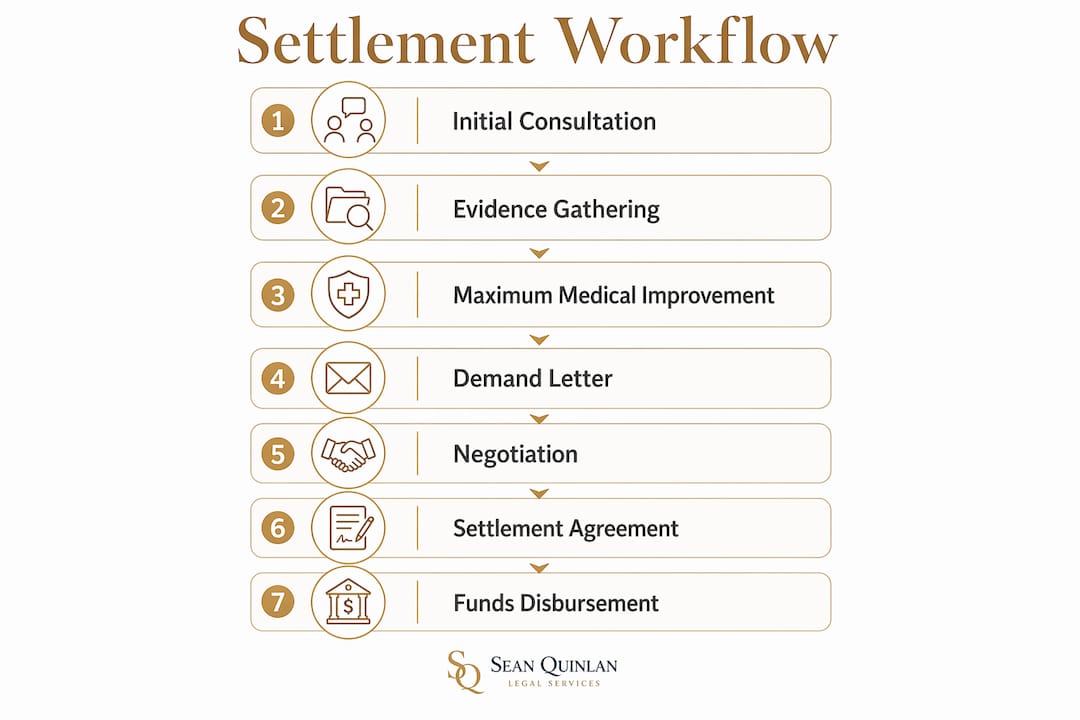
The personal injury settlement workflow follows a defined sequence, and skipping or rushing any stage creates problems downstream. Here is how the process unfolds from start to finish.
1. Initial consultation and case evaluation Your first step is retaining an attorney who specializes in personal injury claims. During this consultation, your attorney evaluates liability, damages, and the strength of your case. This is also when you sign a contingency fee agreement, meaning you pay nothing upfront.

2. Investigation and evidence gathering Your attorney collects police reports, medical records, witness statements, photographs, and expert opinions. This phase builds the factual foundation for your demand. A weak evidence file produces a weak settlement offer, so thoroughness here directly affects your outcome.
3. Reaching maximum medical improvement (MMI) Negotiations should not begin until you reach maximum medical improvement, the point at which your treating physician determines your condition has stabilized. Starting negotiations after MMI captures the full extent of your damages and prevents undervaluation of your claim. Settling too early risks leaving future medical costs uncompensated.
4. Demand letter submission Your attorney drafts and sends a formal demand letter to the insurer. This document outlines your injuries, medical expenses, lost wages, pain and suffering, and the compensation amount you are seeking. It opens the negotiation phase.
5. Negotiation and possible mediation Settlement negotiation centers on liability acceptance and damages valuation based on the evidence gathered. Most cases settle at this stage. If the insurer disputes liability or offers an unreasonably low figure, mediation with a neutral third party may be used before any court filing becomes necessary.
6. Settlement agreement and release signing Once both parties agree on a figure, you sign a settlement agreement and a release of claims. Without signed releases, insurers withhold settlement funds pending legal closure. This document is binding, so review it carefully with your attorney before signing.
7. Disbursement of funds The insurer issues payment to your attorney's trust account. From there, attorney fees, medical liens, and case costs are deducted before you receive your portion. This final phase typically takes 30 to 60 days after the settlement agreement is signed.
Pro Tip: Ask your attorney for a preliminary settlement statement before you sign the release. This document shows you exactly what deductions will be made, so there are no surprises when the final check arrives.
How do legal fees, medical liens, and Medicare reporting affect settlement distribution?
Before a single dollar reaches your hands, several financial obligations must be cleared. Understanding these deductions prevents shock and helps you plan realistically.
Attorney contingency fees represent the largest single deduction. Attorney fees commonly range from 33% to 40% of the gross settlement amount. A $100,000 settlement could mean $33,000 to $40,000 goes directly to your attorney before any other deductions.
Medical liens are legal claims placed against your settlement by healthcare providers, hospitals, or insurers who paid for your treatment. You can learn more about how medical bill liens affect your final payout in Pennsylvania specifically. Liens must be negotiated and resolved before funds are released to you. Your attorney typically handles this negotiation and can often reduce the lien amount.
Medicare's conditional payment recovery process adds another layer of complexity. When Medicare pays for treatment related to your injury, it has a right to recover those costs from your settlement. Key obligations include:
- Reporting your settlement to Medicare promptly after it is finalized
- Responding to Conditional Payment Notices within 30 calendar days of receipt
- Repaying Medicare's share before your attorney can release your funds
The Benefits Coordination and Recovery Center (BCRC) issues formal recovery demand letters after settlement. Failure to repay Medicare on time accrues interest and can complicate or delay your final disbursement significantly.
The Medicare reporting requirement catches many claimants off guard. If you are a Medicare beneficiary and your settlement involves medical treatment, budget extra time for this process. Your attorney should track conditional payment amounts throughout the case, not just at the end.
Common challenges to anticipate in clearing liens and reporting include disputes over lien amounts, delays in receiving itemized billing from providers, and slow response times from Medicare. Each of these can extend your timeline by weeks.
What options exist for receiving your settlement funds and how do they differ?
Once deductions are cleared, you have two primary methods for receiving your remaining settlement funds. The right choice depends on your injury severity, financial situation, and long-term needs.
| Payment Method | How it works | Best suited for | Key consideration |
|---|---|---|---|
| Lump sum | Full remaining balance paid at once | Urgent financial needs, smaller settlements | Requires disciplined financial management |
| Structured settlement | Periodic payments over months or years | Catastrophic injuries, long-term care needs | Funded via annuity; provides income stability |
Lump sum settlements provide immediate access to all funds after deductions. Lump sum payments suit claimants with pressing financial obligations such as outstanding medical bills, mortgage arrears, or lost income that needs immediate replacement. The tradeoff is that managing a large sum requires financial discipline, and some claimants spend funds faster than anticipated.
Structured settlements spread payments over a defined period, sometimes decades in catastrophic injury cases. These are often funded via annuities purchased through defendant agreements, providing long-term periodic payments rather than a single immediate sum. A claimant with a traumatic brain injury, for example, might receive monthly payments for 20 years to cover ongoing care costs. This arrangement protects against the risk of depleting funds prematurely.
From a tax perspective, both lump sum and structured settlement payments in personal injury cases are generally excluded from federal income tax under Section 104 of the Internal Revenue Code. However, any interest earned on a structured settlement annuity may be taxable. Consult a tax professional before finalizing your payment election.
Pro Tip: If your injuries require ongoing medical treatment or long-term care, a structured settlement often provides more financial security than a lump sum. Work with a certified structured settlement consultant alongside your attorney to model both scenarios before deciding.
How do attorneys handle settlement fund management during disbursement?
The disbursement phase is where the personal injury case workflow becomes most administrative, and understanding your attorney's obligations helps you monitor progress and ask the right questions.
Settlement funds are paid to the attorney's trust account first, then distributed after all legal obligations are cleared. This is not optional. State bar rules require attorneys to hold client funds in separate trust or escrow accounts, protecting your money from being commingled with firm operating funds.
The disbursement process inside a law firm typically follows these steps:
- Lien ledger validation: The attorney compiles and verifies every outstanding lien, confirming amounts with each lienholder before posting the settlement.
- Settlement statement generation: A client-facing document is prepared showing gross settlement, all deductions, and the net amount due to you.
- Accounting software posting: The settlement is recorded in the firm's legal accounting system, which tracks disbursements and maintains compliance records.
- Fund release: Once all obligations are cleared and documented, the attorney issues your check or wire transfer.
Modern law firms use specialized software to manage this process. Settlement accounting software can reduce what was once roughly 90 hours of manual work to under 90 minutes. This efficiency matters to you because faster, more accurate accounting means fewer delays and a lower risk of errors in your disbursement.
The typical timeframe from agreement to funds in your hands is 30 to 60 days. Complex cases involving multiple lienholders, Medicare reporting, or disputed lien amounts can extend this window. Ask your attorney at the time of signing approximately when you should expect your disbursement, and request a written settlement statement before funds are released.
You can also review Pennsylvania legal rights related to personal injury claims to understand what your attorney is legally required to provide during this phase.
Key takeaways
A well-managed personal injury settlement workflow requires reaching maximum medical improvement before negotiating, clearing all liens and Medicare obligations before disbursement, and choosing the payment structure that fits your long-term financial needs.
| Point | Details |
|---|---|
| Start negotiations at MMI | Waiting for maximum medical improvement prevents undervaluation and captures full damages. |
| Attorney fees reduce gross settlement | Contingency fees of 33% to 40% are deducted before you receive any funds. |
| Medicare reporting is mandatory | Respond to Conditional Payment Notices within 30 days to avoid interest and delays. |
| Disbursement takes 30 to 60 days | Lien resolution and accounting steps extend the timeline after a settlement is signed. |
| Choose payment method carefully | Structured settlements protect long-term financial stability in catastrophic injury cases. |
What I've learned after years of watching settlements go sideways
The claimants who struggle most with the settlement process are not the ones with the weakest cases. They are the ones who were never told what to expect. They sign a release, assume a check is coming next week, and then spend two months calling their attorney's office wondering what is happening.
The single most underestimated part of the workflow for accident settlement is the Medicare reporting requirement. Clients who are Medicare beneficiaries often do not realize that their settlement cannot be fully disbursed until Medicare's conditional payment is resolved. That process has its own timeline, its own bureaucracy, and its own potential for delay. An attorney who tracks conditional payment amounts throughout the case, rather than scrambling to address them at the end, saves clients weeks of waiting.
I also see claimants push to settle before they have reached maximum medical improvement. The pressure is understandable. Bills are piling up, income has stopped, and a settlement offer feels like relief. But settling early almost always means settling for less than the claim is worth. Future surgeries, ongoing therapy, and long-term care costs disappear from the calculation the moment you sign that release.
The best thing you can do as a claimant is stay engaged. Ask for a preliminary settlement statement before signing anything. Understand what liens are outstanding and what your attorney is doing to reduce them. Know whether Medicare is involved and what stage that process is at. The legal steps for injury settlements are not mysterious once someone explains them clearly. You deserve that explanation from day one.
— Sean
Work with Attorney Sean P. Quinlan on your personal injury claim
Navigating a personal injury settlement involves more than accepting an offer. It requires managing liens, meeting Medicare reporting deadlines, and making informed decisions about how you receive your funds.

Attorney Sean P. Quinlan at Pennsylvaniadui brings focused experience to personal injury cases across multiple Pennsylvania counties, handling case evaluation, lien management, and settlement negotiation with clear communication at every stage. If you want to understand exactly where your claim stands and what your net recovery will look like, schedule a consultation today. Pennsylvaniadui offers personalized guidance designed to protect your recovery and move your case forward efficiently.
FAQ
What is a personal injury settlement workflow?
A personal injury settlement workflow is the step-by-step process that moves a claim from initial injury through investigation, negotiation, agreement, and final fund disbursement. It involves your attorney, the at-fault party's insurer, lienholders, and potentially Medicare.
How long does it take to receive settlement funds after signing?
The typical disbursement timeline is 30 to 60 days after the settlement agreement is signed. Cases with multiple liens or Medicare reporting obligations may take longer.
What deductions come out of a personal injury settlement?
Attorney contingency fees of 33% to 40%, medical liens from healthcare providers, Medicare conditional payments, and case costs are all deducted from the gross settlement before you receive your share.
Should I settle before reaching maximum medical improvement?
No. Settling before MMI risks undervaluing your claim because future medical costs and long-term impairments may not yet be known. Most experienced attorneys wait until your condition stabilizes before submitting a demand.
What is the difference between a lump sum and a structured settlement?
A lump sum delivers all remaining funds at once after deductions, while a structured settlement provides periodic payments over time, often funded through an annuity. Structured settlements are most beneficial in catastrophic injury cases requiring long-term financial support.