

Most people think a personal injury settlement is simply about receiving a check. The reality is far more layered. The role of settlements in injury claims extends to controlling outcomes, protecting your legal rights, and securing your financial future in ways a courtroom verdict rarely can. Over 95% of personal injury cases resolve through settlement rather than trial, which means understanding how this process works is not optional for injured Pennsylvanians. It is the difference between recovering fully and leaving compensation on the table.
Table of Contents
- Key takeaways
- The role of settlements in injury claims: how the process works
- Factors that influence how much your settlement is worth
- Legal protections and risks inside settlement agreements
- Financial planning around your settlement proceeds
- Common mistakes that reduce settlement value
- My perspective on getting settlements right in Pennsylvania
- How Attorney Sean Quinlan can help you maximize your settlement
- FAQ
Key takeaways
| Point | Details |
|---|---|
| Settlements dominate injury claims | The vast majority of Pennsylvania injury claims resolve through negotiated settlements, not courtroom verdicts. |
| Timing affects settlement value | Waiting until Maximum Medical Improvement before settling protects you from undervaluing future medical needs. |
| Legal representation multiplies recovery | Attorneys consistently secure significantly higher settlements than claimants who negotiate alone. |
| Binding agreements carry serious risks | Settlement releases are permanent contracts; reviewing every clause before signing prevents costly legal mistakes. |
| Financial planning matters after settlement | How you manage proceeds determines whether compensation truly covers your long-term needs. |
The role of settlements in injury claims: how the process works
Understanding how settlements work in injuries begins with recognizing that the process is a negotiation, not a fixed transaction. Insurance companies do not hand over fair compensation by default. They start low and depend on injured claimants accepting it.
Here is how the settlement process typically unfolds in Pennsylvania:
- Injury occurs and medical treatment begins. Your first priority is getting proper care and documentation. Every treatment record, diagnosis, and bill becomes evidence of your damages.
- Attorney evaluates the claim. A personal injury attorney reviews liability, insurance coverage, and the extent of your injuries to estimate a realistic settlement range.
- Demand letter is submitted. Once you reach Maximum Medical Improvement (MMI), meaning your condition has stabilized and future treatment needs are clearer, your attorney sends a formal demand to the insurer.
- Insurer responds with an initial offer. Insurance adjusters aim to settle quickly for the lowest amount possible. Initial offers are frequently 20 to 40% of the actual claim value.
- Negotiation takes place. Your attorney counters with evidence, medical records, expert opinions, and legal arguments to push the offer toward fair value.
- Settlement is reached or litigation begins. If both parties reach an agreement, a written settlement agreement is signed. If not, the case proceeds toward trial.
The role of mediation in injury claims is worth noting here. Mediation is a structured negotiation with a neutral third party who helps both sides reach agreement. It is commonly used when direct negotiations stall and can be faster and cheaper than trial while still producing meaningful outcomes.
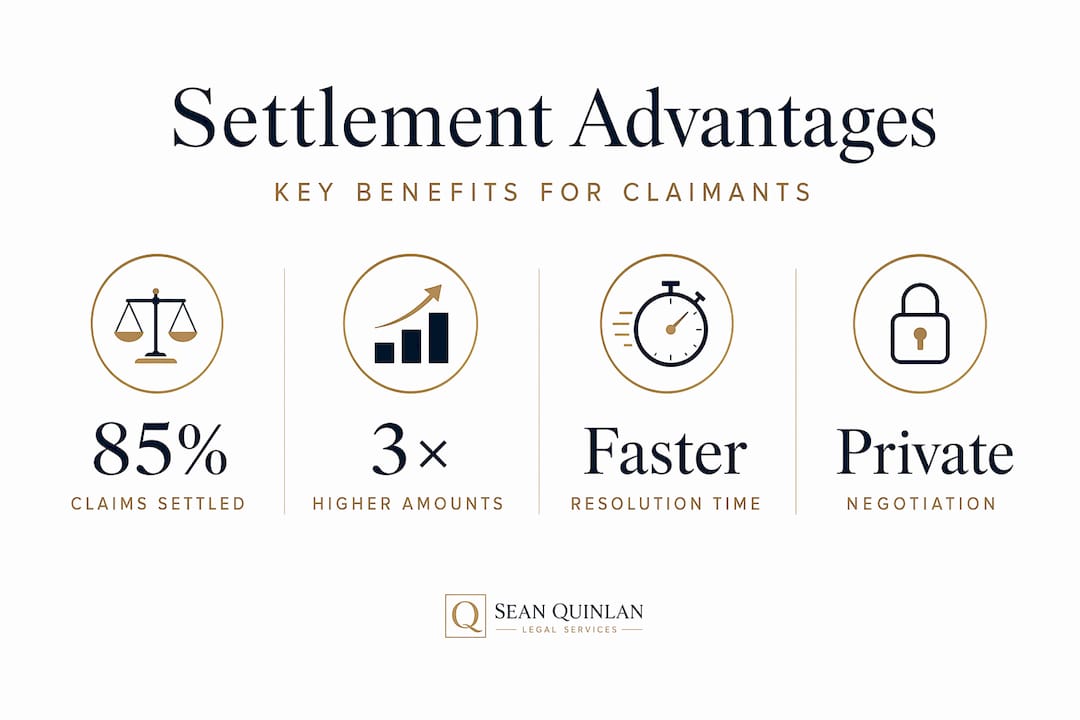
Attorneys increase settlement amounts three to four times compared to claimants who negotiate alone. That gap reflects the reality that legal representation signals seriousness to insurers and prevents common mistakes that weaken claims.
Pro Tip: Never accept a settlement offer before reaching MMI. Settling too early risks leaving significant future medical expenses completely uncovered.
Factors that influence how much your settlement is worth
Settlement amounts are not arbitrary. They reflect a calculation of specific damages your injury caused, adjusted by factors that either strengthen or weaken your bargaining position.
What damages a settlement can cover
Injury settlements cover two broad categories of compensation:
- Economic damages: Medical bills you have already paid, projected future treatment costs, lost wages during recovery, and reduced earning capacity if your injury limits your ability to work long term.
- Non-economic damages: Pain and suffering, emotional distress, loss of enjoyment of life, and the effect of permanent impairment on your daily relationships and activities. These are typically calculated using a multiplier applied to economic damages, reflecting injury severity.
For serious injuries, future care costs are frequently the most contested part of any claim. Expert life care planners are often critical in catastrophic cases to document and justify what ongoing medical support will actually cost over a lifetime.
Key factors that adjust settlement value

| Factor | Effect on Settlement |
|---|---|
| Severity and permanence of injury | More serious injuries with lasting effects command higher compensation |
| Quality of medical documentation | Strong, consistent records support larger and more defensible claims |
| Insurance policy limits | Caps on available coverage constrain maximum recovery regardless of actual damages |
| Liability clarity | Clear fault by the other party strengthens negotiating leverage |
| Comparative negligence | Pennsylvania's modified comparative fault rule reduces your recovery by your percentage of fault |
Pennsylvania follows a modified comparative negligence standard. If you are more than 50% at fault, you lose the right to recover anything at all. Even partial fault below that threshold reduces your compensation proportionally. This is why consistent, credible medical documentation and a clear liability narrative matter so much before you enter negotiations. Understanding how your medical bills affect settlement value is one of the most practical steps toward protecting your claim.
Legal protections and risks inside settlement agreements
Once you sign a settlement agreement, you are bound by its terms. That finality is both the strength and the danger of settling an injury claim. Before you put pen to paper, you need to understand exactly what you are agreeing to.
Here are the critical legal elements every claimant should review:
- Release of liability clause. This provision ends your ability to file any future claim related to the same injury against the same party. If new complications arise after signing, you generally have no legal recourse.
- Repayment clauses. Some agreements include triggers that require you to return settlement funds if subsequent related claims are filed. Failing to understand these clauses can lead to serious financial penalties.
- Scope of the release. The release language must accurately reflect all injuries and conditions stemming from the incident. Vague language that covers unintended future conditions can strip you of rights you did not mean to surrender.
- Confidentiality provisions. Many settlement agreements include confidentiality clauses preventing you from disclosing the amount received. These can benefit claimants by avoiding public scrutiny but should be reviewed carefully.
One often overlooked legal risk is that informal agreements can become binding contracts. Courts can enforce verbal or email settlements based on mutual agreement, even without a formal signed document. This means casual communications during negotiations could unintentionally lock you into terms you did not fully consider.
Pro Tip: Never respond to settlement discussions via email or phone without your attorney present or advising you. Informal statements can be treated as binding acceptances under Pennsylvania contract law.
Understanding your legal rights in Pennsylvania injury claims before entering settlement negotiations is one of the best ways to protect yourself from these risks.
Financial planning around your settlement proceeds
Receiving a settlement check resolves your legal claim. Managing that money well determines whether the settlement actually supports your recovery long term. This distinction gets overlooked far too often.
Lump sum versus structured settlements
| Option | Best For | Key Consideration |
|---|---|---|
| Lump sum payment | Claimants with manageable injuries and clear financial plans | Requires disciplined management to avoid depleting funds too soon |
| Structured settlement | Long-term or catastrophic injuries with ongoing care needs | Provides steady income stream; may reduce risk of impulsive spending |
Post-settlement regret most often stems from poor financial decisions rather than the settlement amount itself. Structured settlements spread payments over time, protecting claimants who might otherwise exhaust a lump sum before anticipated medical bills arrive.
One critical financial consideration is the impact of a settlement on public benefits. Receiving a large lump sum can affect eligibility for Medicaid, Supplemental Security Income, or other government assistance programs. A settlement planner or special needs trust may preserve those benefits while still allowing you to receive full compensation.
Pro Tip: Before accepting any settlement structure, consult both your attorney and a financial advisor. Claimants who plan with professional guidance report significantly higher satisfaction with their long-term recovery outcomes.
Common mistakes that reduce settlement value
Knowing the pitfalls is just as important as knowing the process. These are the most damaging errors injured claimants make when handling their own settlement options for claims.
- Settling before MMI. Accepting an offer before your injuries stabilize means the full extent of future treatment costs is unknown. Once you sign, that gap is yours to absorb.
- Discontinuing medical treatment. Gaps in treatment create the impression that your injuries were not serious. Insurers use inconsistent care as justification for lower offers.
- Underestimating future costs. Soft tissue injuries can lead to chronic conditions. Failing to project long-term care needs undervalues your claim at the negotiating table.
- Settling without legal counsel. Settling alone consistently produces lower outcomes. Insurers know unrepresented claimants are less likely to push back effectively.
- Returning to normal activities too soon. Premature return to work or physical activity gives insurers evidence to argue that your injuries were not as severe as claimed, weakening the case before settlement talks even begin.
- Signing agreements without full review. Rushing through paperwork to receive funds quickly creates the risk of agreeing to repayment clauses, overly broad releases, or other provisions that can cost far more later.
Understanding the full scope of what a personal injury attorney does in Pennsylvania can help you see why professional guidance is not a luxury but a practical necessity.
My perspective on getting settlements right in Pennsylvania
I have seen far too many injured people leave significant money behind, not because the law failed them, but because they acted before they were ready.
The single biggest mistake I observe is timing. People feel pressure to settle quickly, whether from financial stress, frustration with the process, or the simple desire to move on. That pressure is understandable. But a settlement signed too early, before your true medical picture is clear, is a settlement you will likely regret. The law does not give you a second chance once that release is signed.
What I have also learned over the years is that claimants who focus exclusively on the dollar amount often miss the bigger picture. Settlements offer more than money. They offer certainty, privacy, and control over the outcome of your claim. Those elements have real value, especially when the alternative is a trial that can take years and deliver an unpredictable result.
My advice to any injured person in Pennsylvania reading this: approach the settlement process as a business decision, not an emotional reaction. Get the full medical picture first. Review every word of the agreement with your attorney. And think past the check itself to how the proceeds will actually support your life. Compensation that runs out before your medical needs do is not a victory. Come to this process informed and prepared, and you will have far fewer regrets.
— Sean
How Attorney Sean Quinlan can help you maximize your settlement
If you or someone in your family has been injured in Pennsylvania, the decisions you make about your settlement will shape your recovery for years to come. Attorney Sean Quinlan at Pennsylvaniadui brings focused legal experience to help injured clients negotiate aggressively with insurance companies, navigate complex settlement agreement terms, and protect their long-term financial interests.

Pennsylvaniadui offers personalized consultations where Sean reviews the specifics of your claim and provides honest guidance on what your case may be worth and how to pursue it. Whether you are just starting your claim or facing pressure to accept a low offer, professional legal support at this stage is the most effective way to protect your rights. Visit the personal injury services page to schedule your free consultation today. Your recovery deserves more than a quick settlement.
FAQ
What is the role of settlements in injury claims?
Settlements resolve injury claims through a negotiated agreement between the injured party and the at-fault party or their insurer, typically resulting in compensation without a trial. They provide certainty, faster resolution, and legal finality for both sides.
How long does it typically take to settle an injury claim in Pennsylvania?
Settlement timelines vary based on injury severity, but most claims resolve after the claimant reaches Maximum Medical Improvement, which can take months to over a year for serious injuries.
Should I accept the first settlement offer from an insurance company?
No. Initial offers are typically 20 to 40% of the fair claim value, and accepting without negotiation almost always results in undercompensation. Consult an attorney before responding to any offer.
What is the difference between settlements and court trials for injury claims?
Settlements are private, negotiated agreements reached outside court that provide predictable outcomes, while trials are public proceedings with uncertain verdicts that can take years to resolve.
Can a settlement agreement be challenged after signing?
Rarely. Settlement agreements are binding contracts, and courts generally uphold them unless there is clear evidence of fraud, coercion, or mutual mistake. Careful review before signing is the most reliable protection.